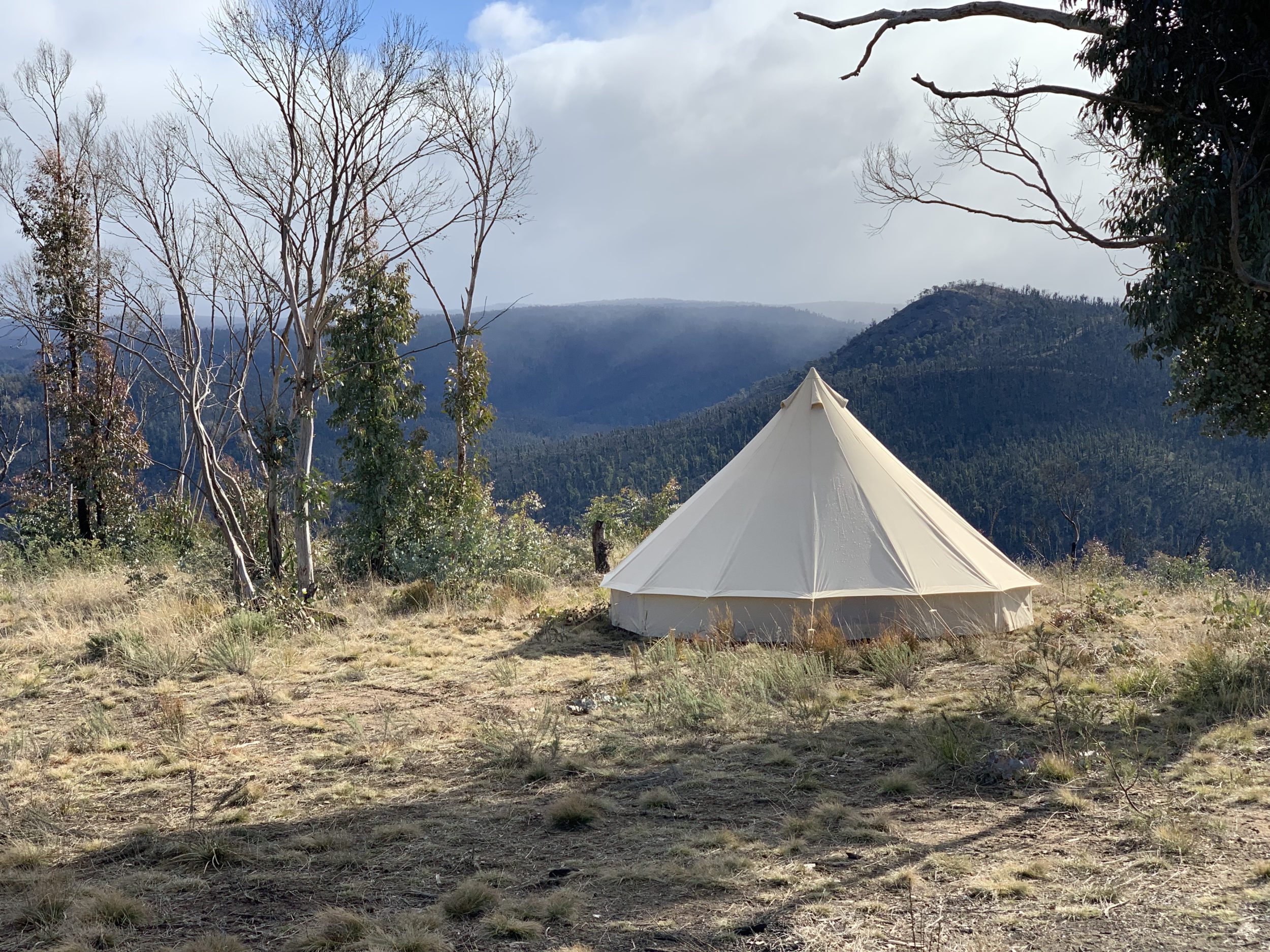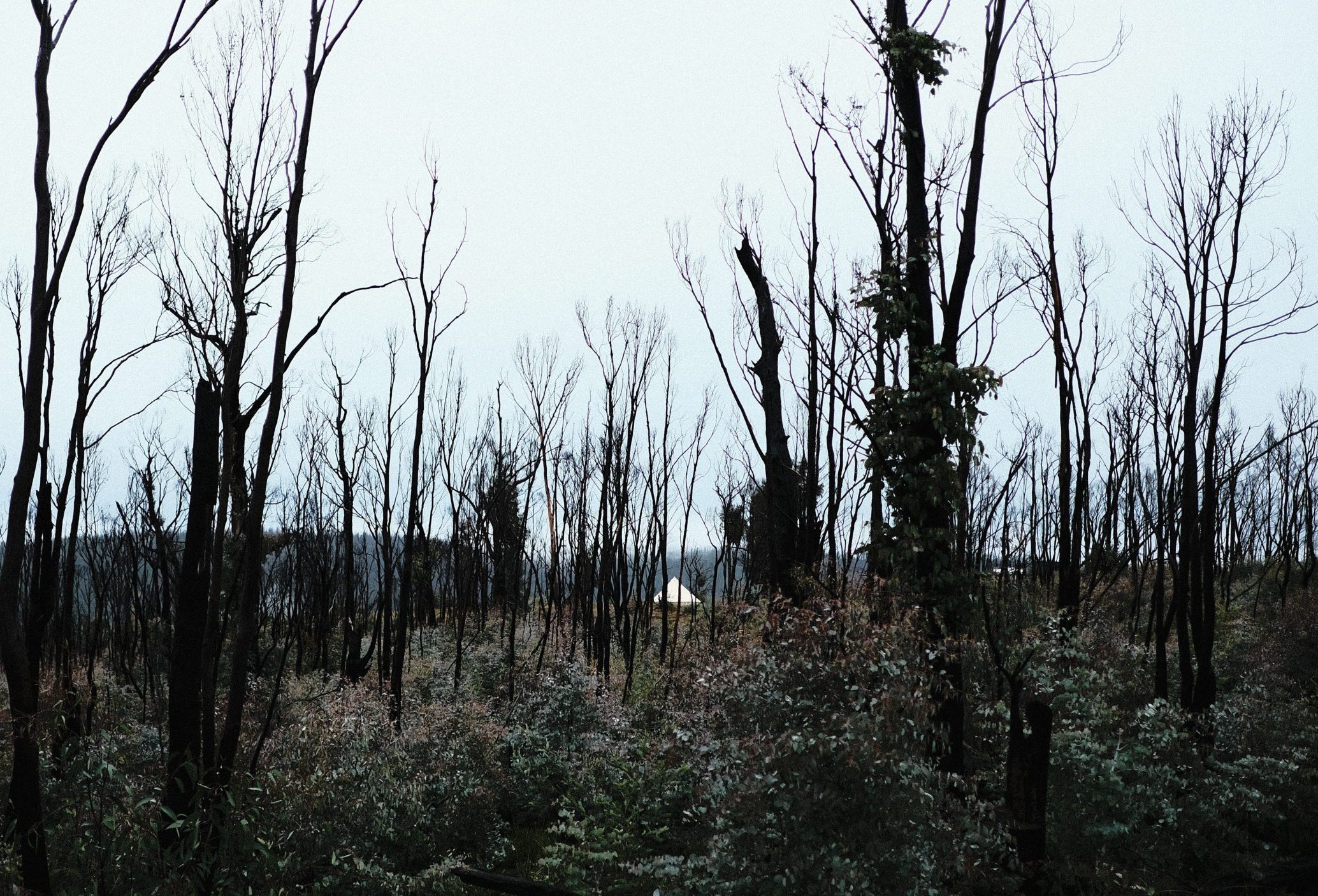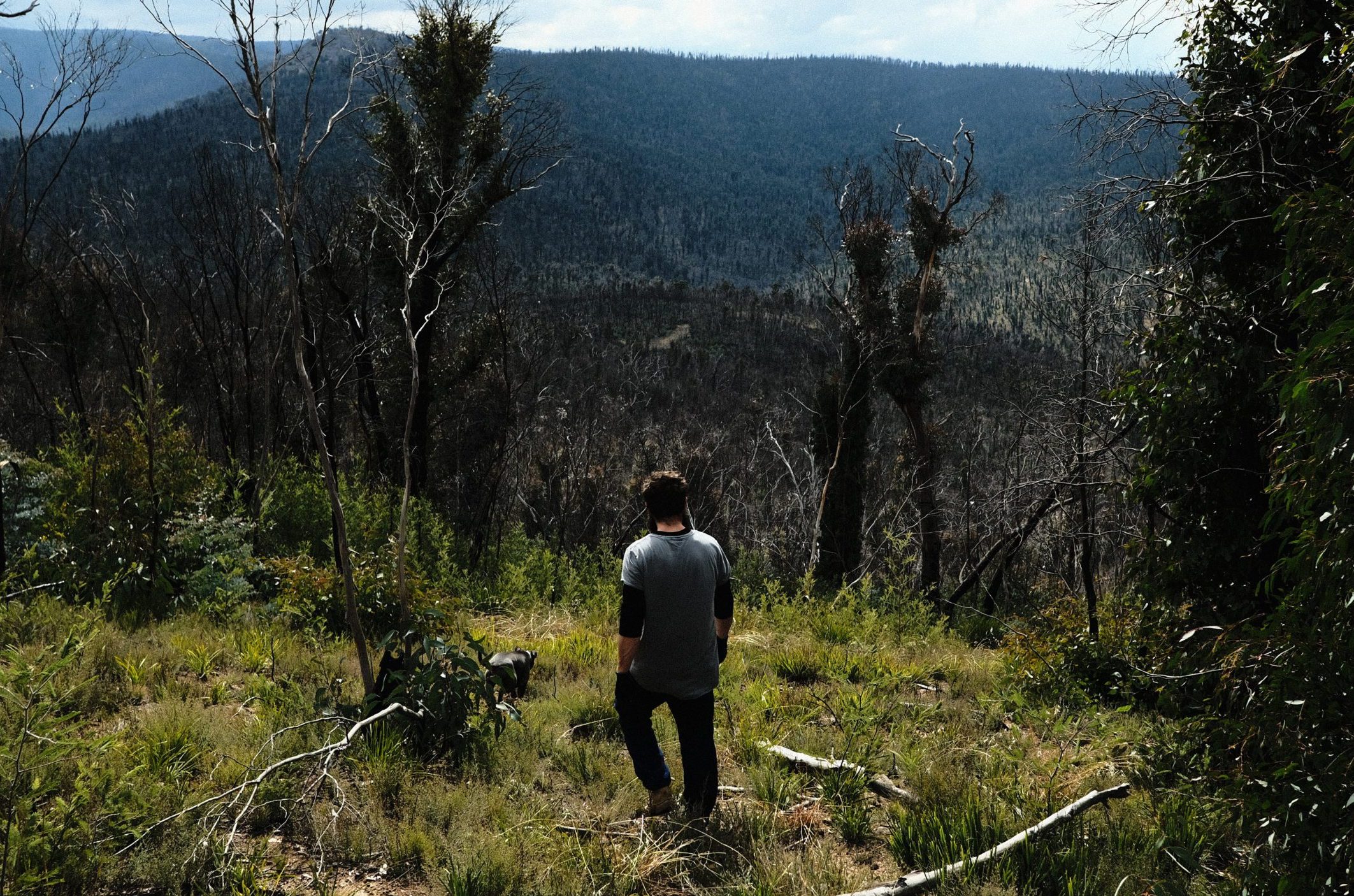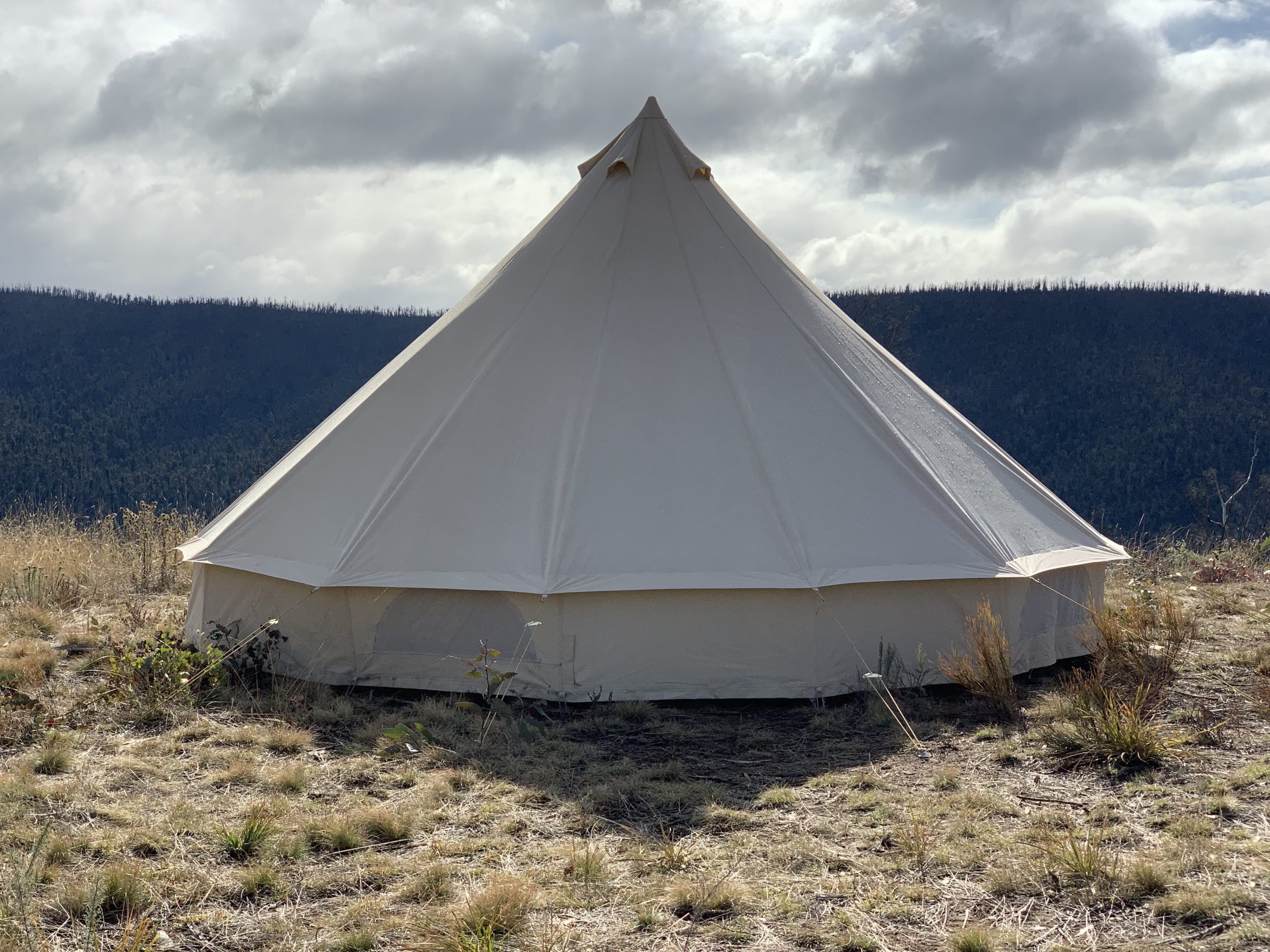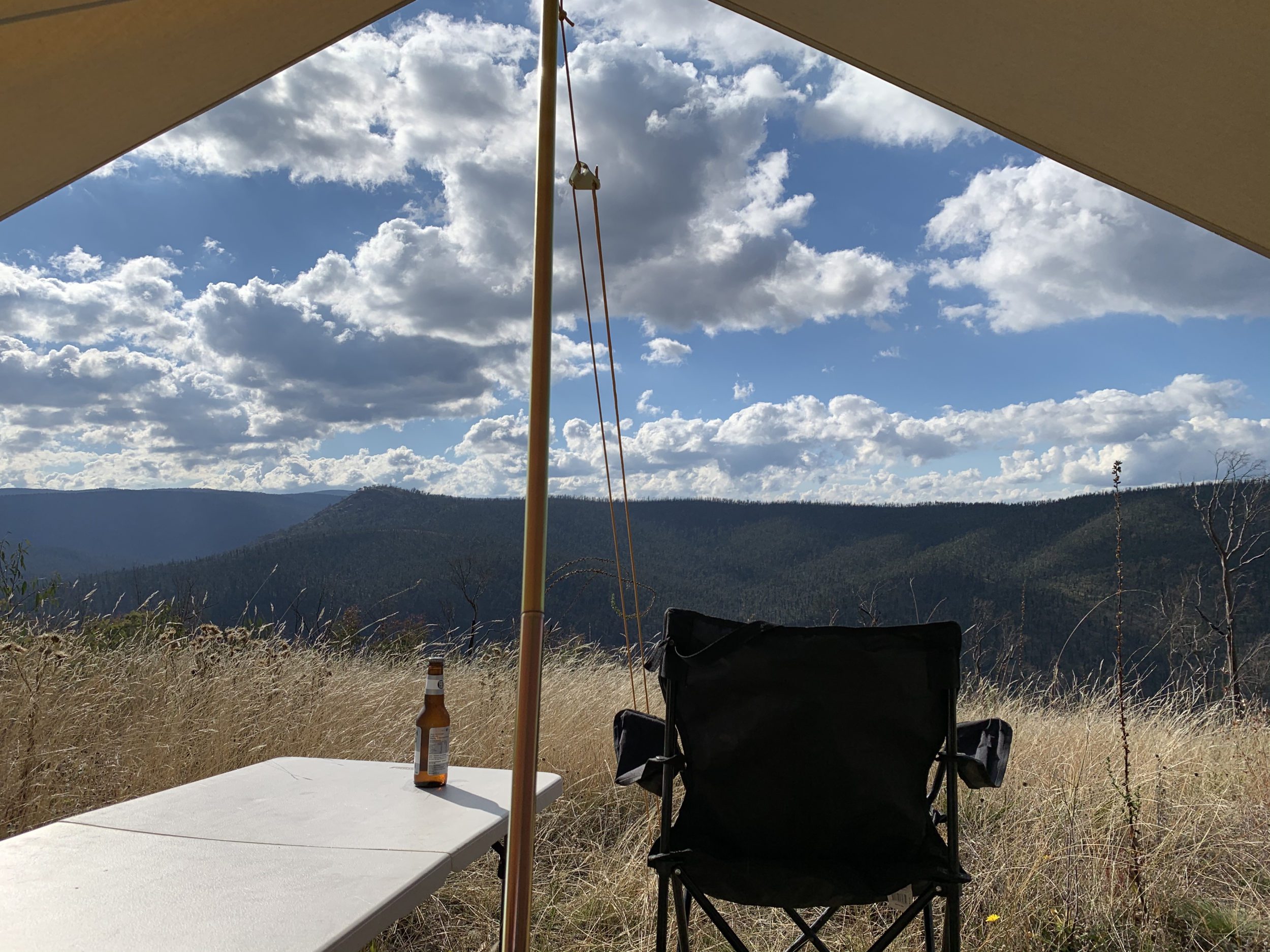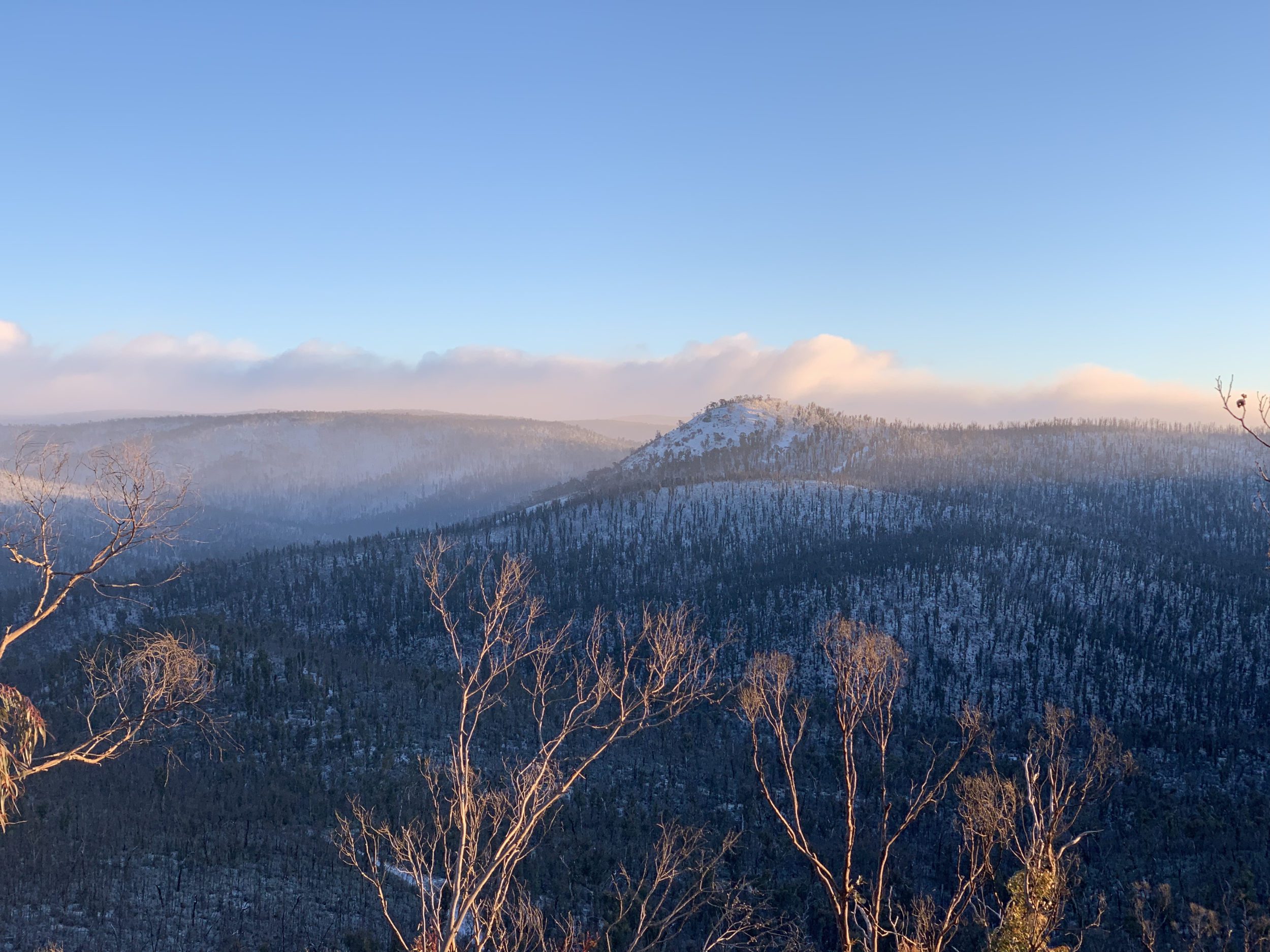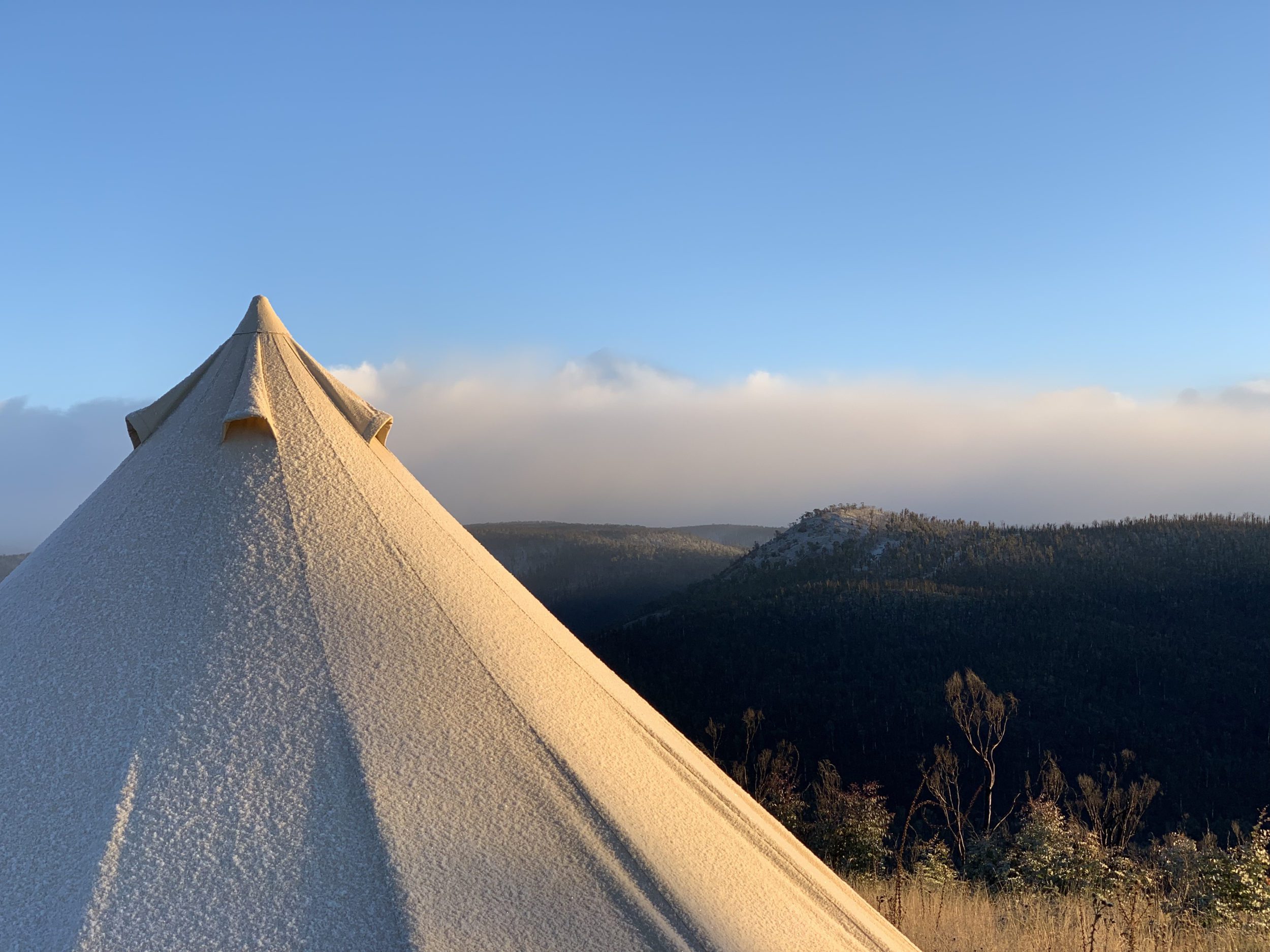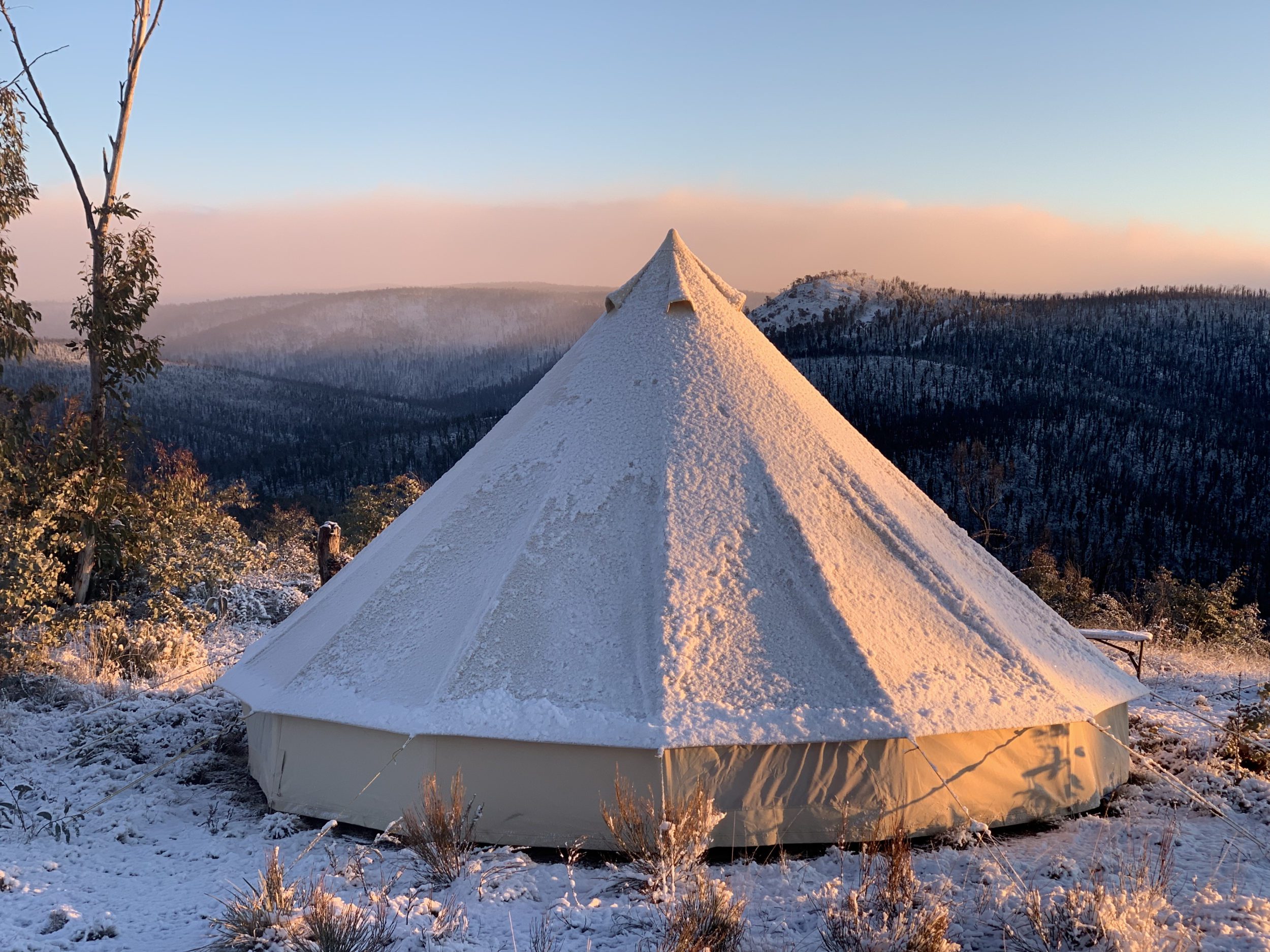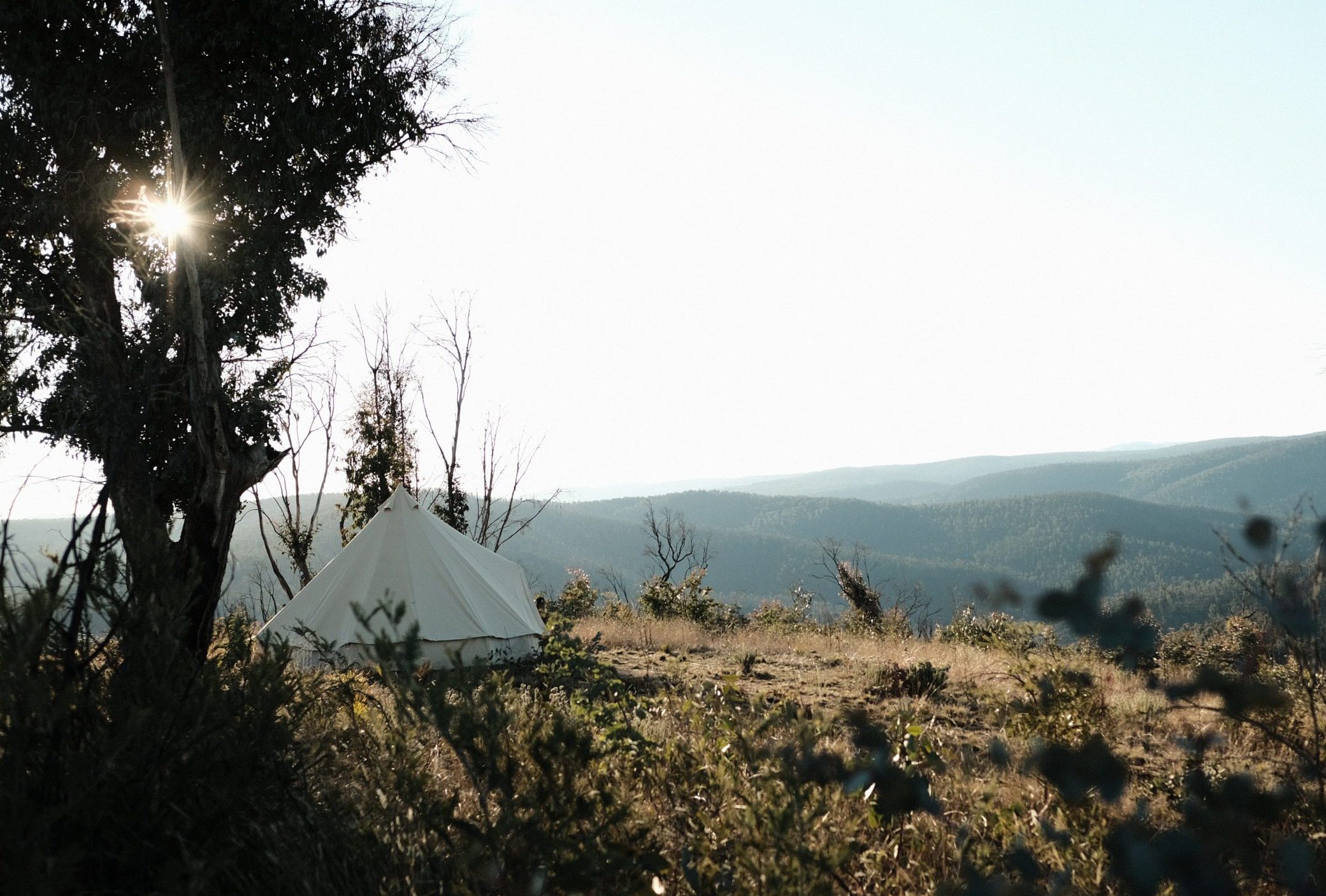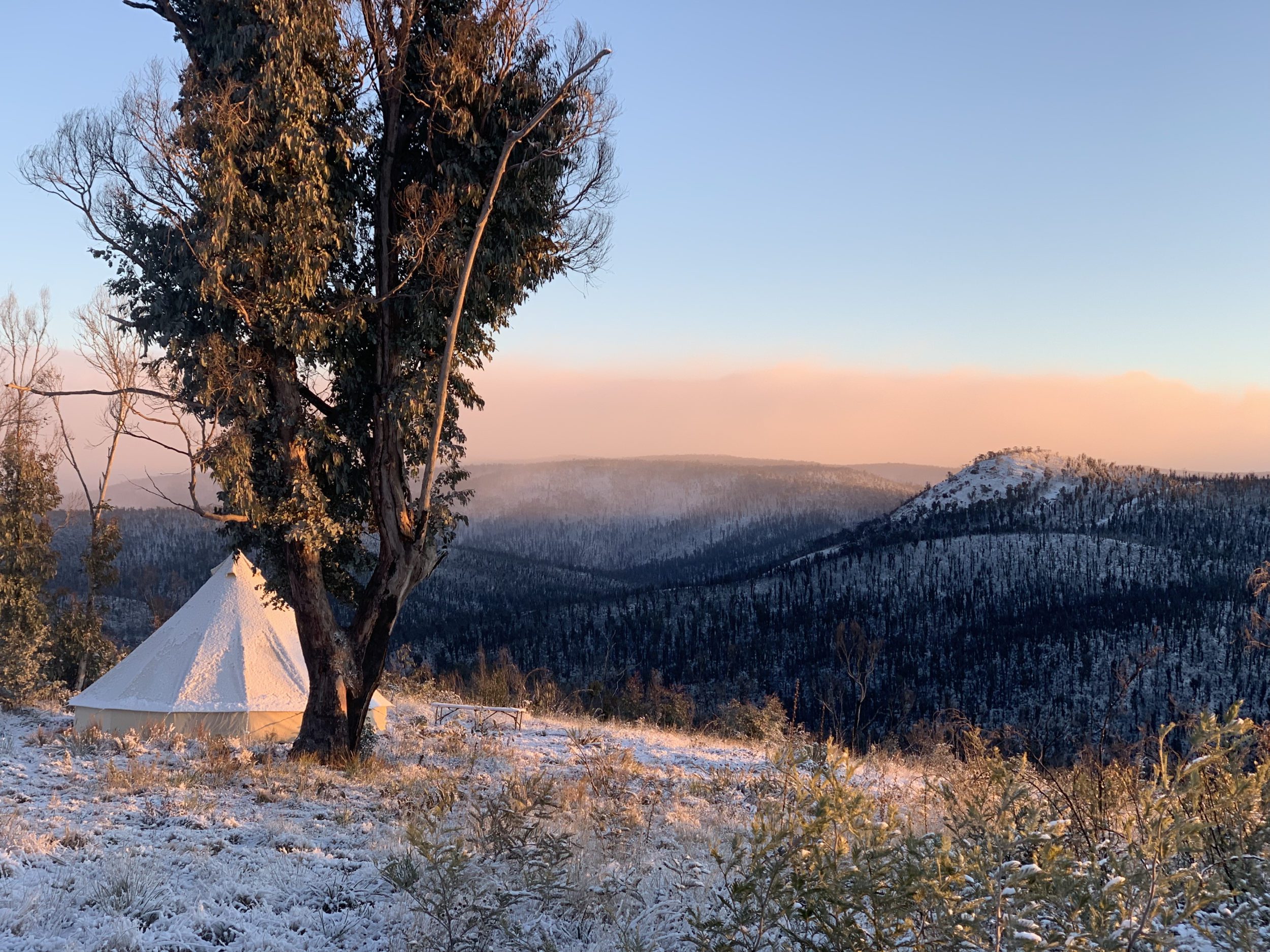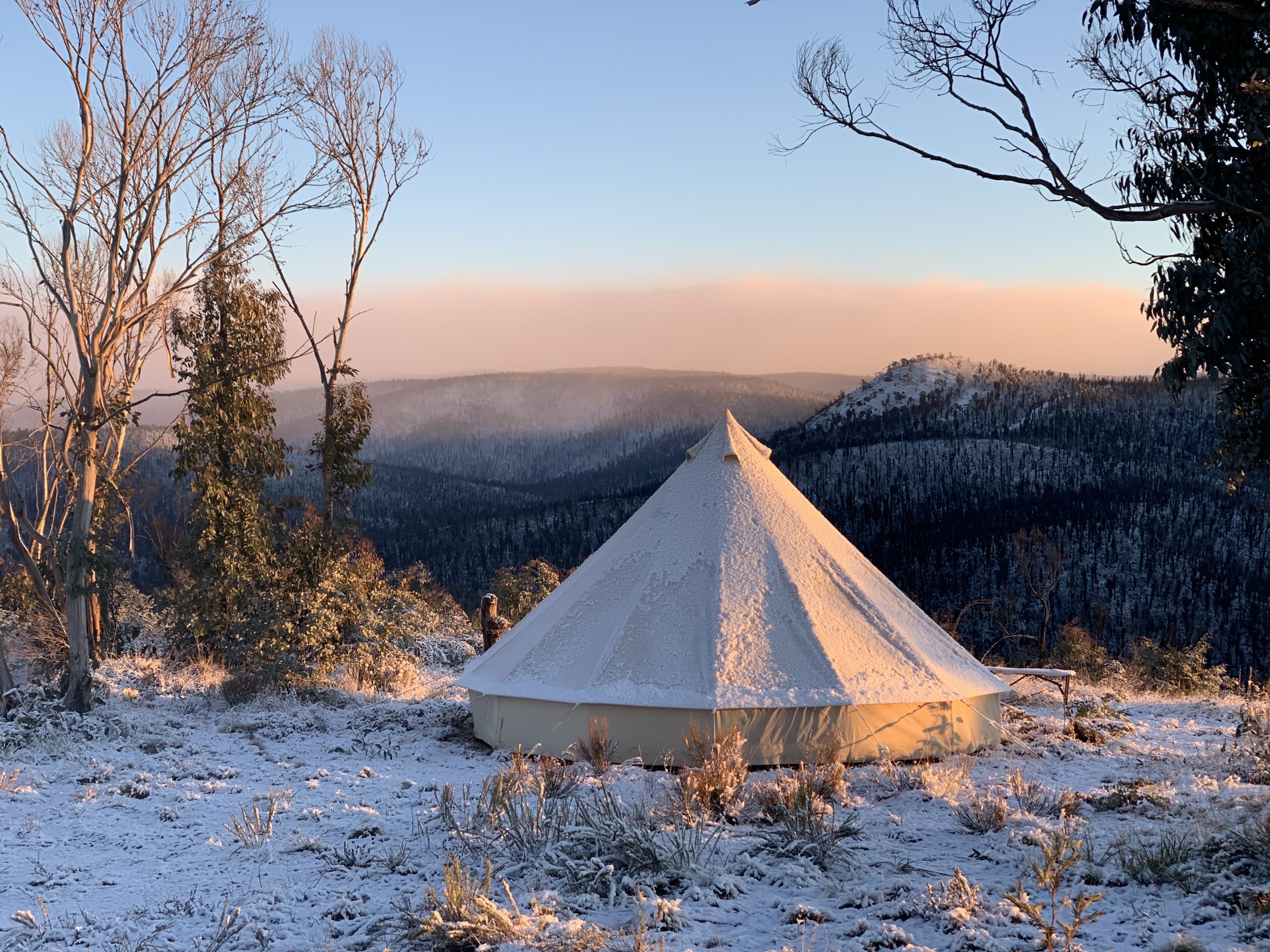
When Dave Christison set up his 5m Homecamp Bell Tent at the base of Mt Hotham, he thought he’d camp in it for a couple days. 5 months and multiple lockdowns later, Dave’s tent was still up – weathering intense storms and extreme conditions. Unwittingly Dave put his tent through the ultimate durability test, and these are the lessons he learnt along the way.
Homecamp’s 5m bell tent. She’s one sturdy beast. And I can safely say that with some authority because over the last five months, I have put one through the absolute ringer. Every single day and often under some pretty extreme conditions. This was not some grand experiment I planned to conduct, it was merely a consequence of impulsive decisions, a love for the high country and circumstance.
This post aims to outline what I’ve learned about the tent so far. But first, let me preface that I am a ‘bell tent noob’. I’d never owned one before and had only ever slept in one once at a remote idyllic wedding that almost turned into Fyre Festival 2.0. So it’s fair to say that my attitude towards the ‘classic bell’ started out somewhat skewed.
Sidebar
Setting up at the base of Mt Hotham
It was Christmas Eve last year when I signed a contract for a small mountain (or perhaps more technically a large hill) near the base of Mt Hotham. Three hundred and thirty acres of untamed Victorian high country. I had a vision, the vague assembly of a plan and a gut feeling that I couldn’t shake. What I didn’t have was pre-approval for a loan or the time to seek one.
Fast forward four months of finance hell and I was finally able to visit the property that I had been obsessing over via grainy photos, Google Earth, hundreds of pages of council planning overlay documents and a likely over romanticised memory from the one and only 30-minute inspection I had done back in November.
After all that waiting I only had only two days to experience the mountain before I needed to start a job that was going to write me off for the next couple of months. I had to see it. And on first impression it was glorious. Time to set up a shelter!
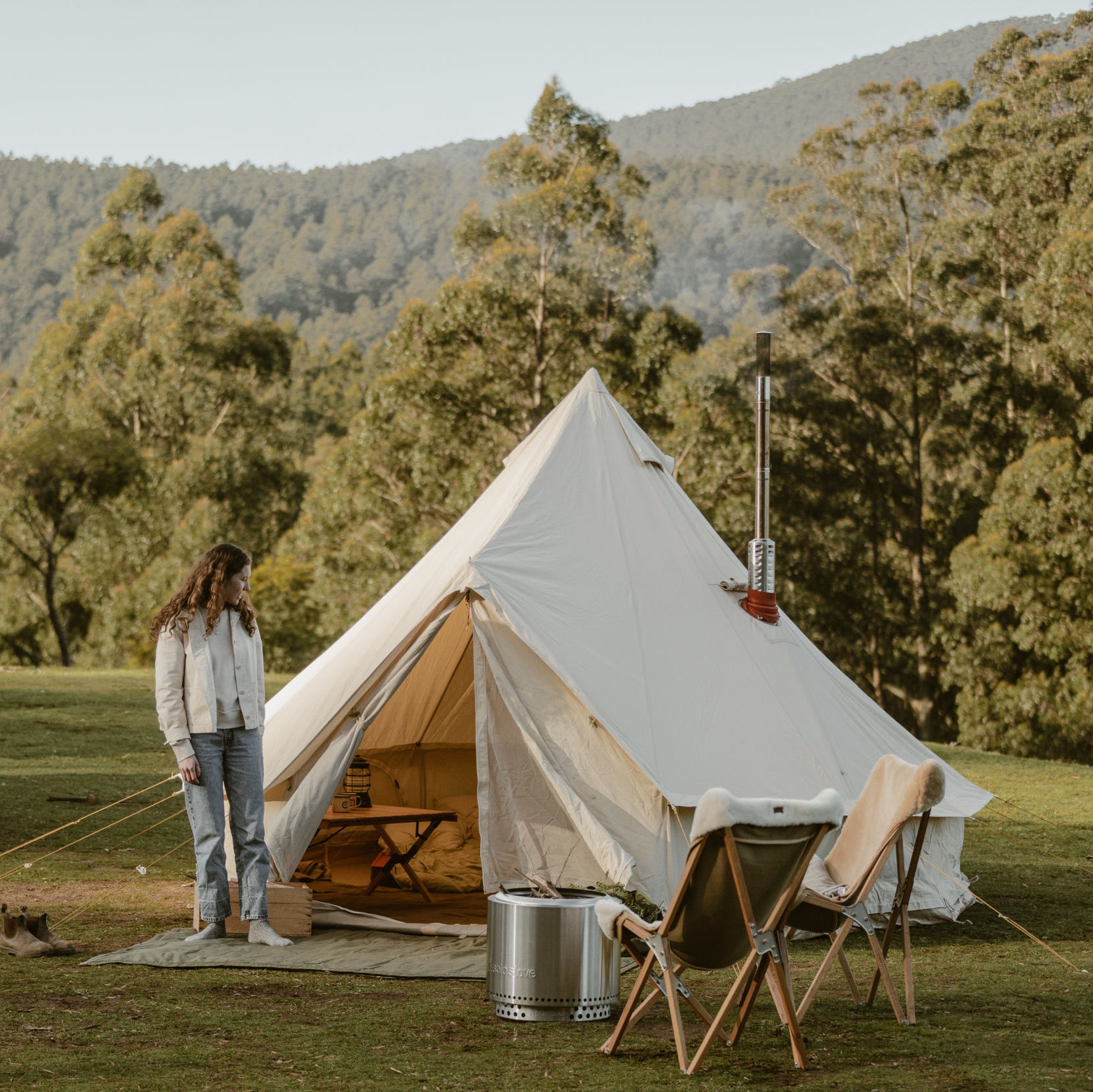
“There were always going to be phases to this silly mountain operation, and now it was time for Basecamp Phase 1 – shelter. Why I landed on a Homecamp Bell Tent, in the end, came down to reviews, their hot tent/stove bundle and the fact that I’d recently bought a few bits and pieces from them and everything I’d purchased oozed quality. So I took a punt and got a 5m bundle. It arrived within days.”
Sidebar
Lesson #1 – Set it up properly the first time.
Don’t peg down the guy lines (even if slack) before erecting the poles. It puts too much tension on the canvas (which is already going to be tight the first time round) making what should be an easy job unnecessarily difficult. I may be the only fool to ever make this mistake, but better to put it here in the off chance it saves someone else the unnecessary struggle.
The first two nights in the bell were awesome. It was amazing how sturdy it was. I planned to pack the tent down before leaving, but I got so carried away exploring the property, I ran out of time and needed to bail back to the city to start this job. I figured screw it, I have a window to return briefly in a week, I’ll come back then and pack it down, plus it will be a good test to see how it holds up in the weather.
Sidebar
5 weeks later…
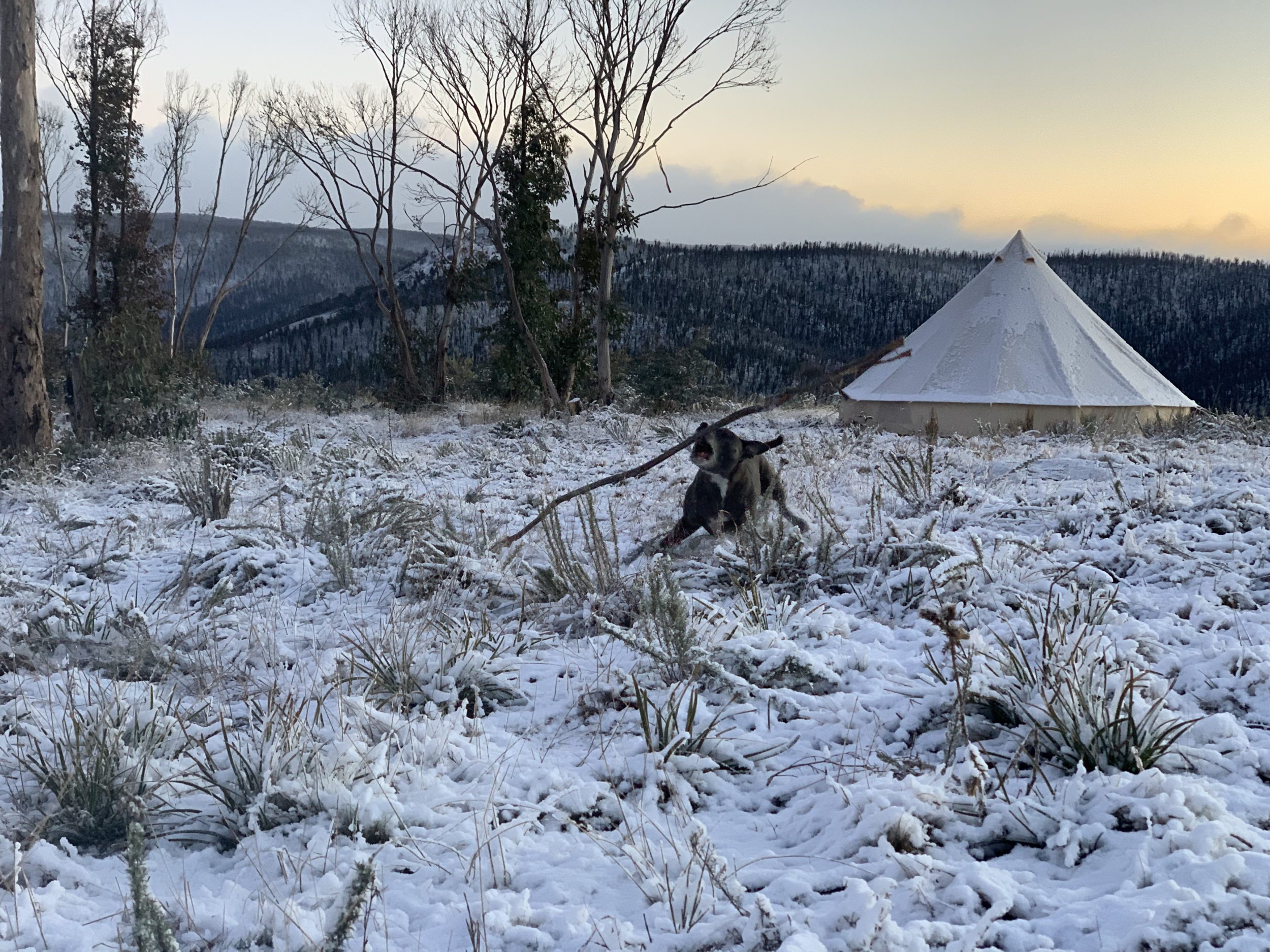
A lockdown kicked in, I think it was the first one of this year, but who’s counting. Something like five weeks passed before I was able to make it back to the top. Over that time, those crazy winds that destroyed houses across Victoria had taken place and the weather forecasts in the alpine area weren’t much better; clocking 90kmh plus winds at times. And where did I place said tent? On the single most exposed point of the mountain, at an elevation of 1155m of course. And why did I do this? Because the view from that spot is epic and throwing caution to the wind(s) seemed like a good idea at the time.
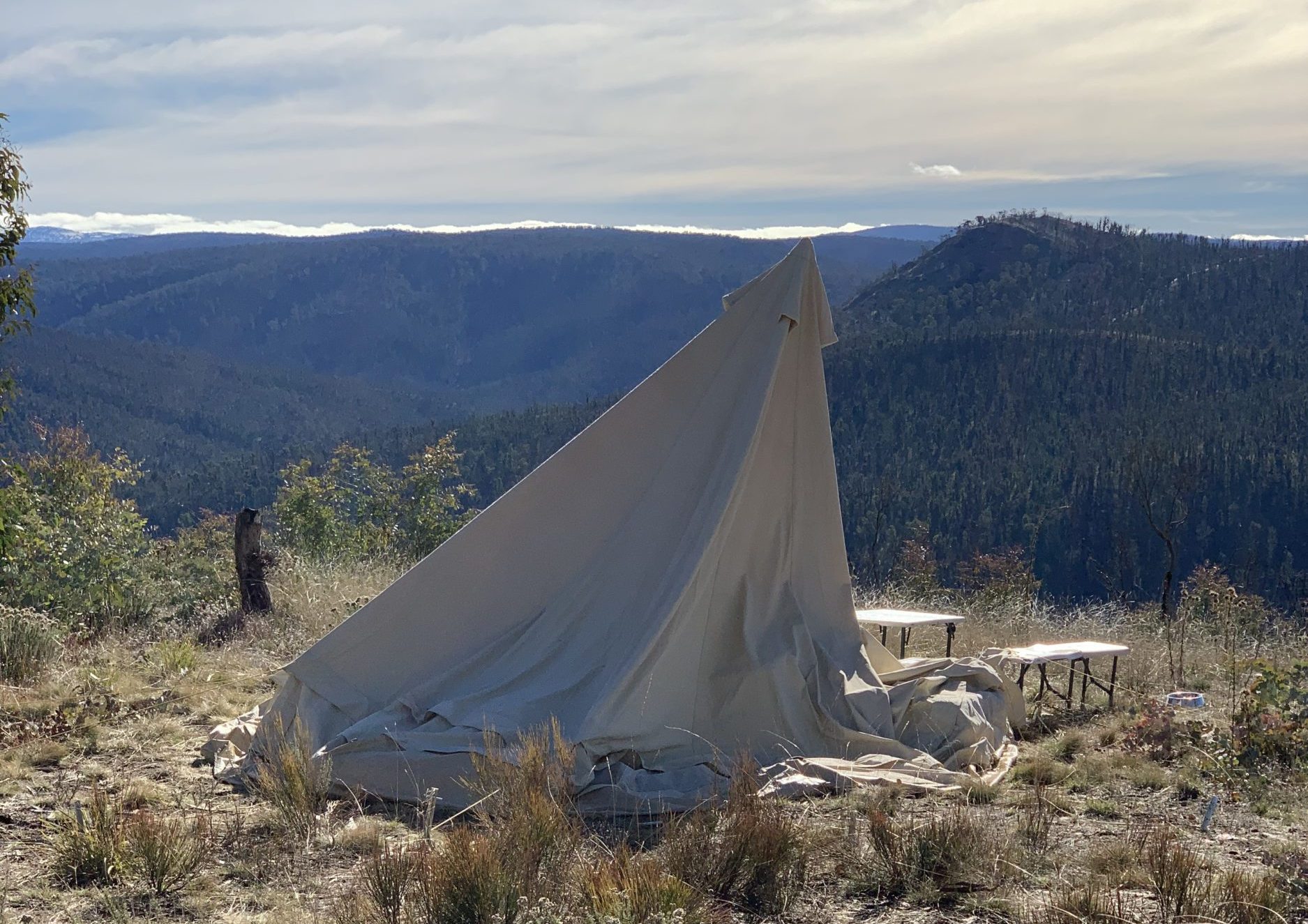
So upon my return, I was expecting the worst. What I found wasn’t great, but it certainly wasn’t ‘the worst’. I was actually kind of impressed. The tent was half collapsed and flooded, but in some ways still standing. This gave me hope for its potential. Now I needed to figure out what went wrong. Indulge me for a moment in assuming that positioning the tent in the most exposed position possible was not a mistake, as I said, the view is epic. In that case then, my first mistake was to leave the tent in an extremely exposed position for a long period with the front awning attached. Of all the things that went wrong to cause the tent to collapse, the only actual damage done was a single tear to a corner eyelet on the awning, and it was the awning breaking free which wreaked havoc on the tent.
So, Lesson #2 is don’t get greedy, use the awning for short set-ups and in less exposed sites.
Sidebar
Lesson #3 – in hardcore conditions, go hardcore on the pegs.
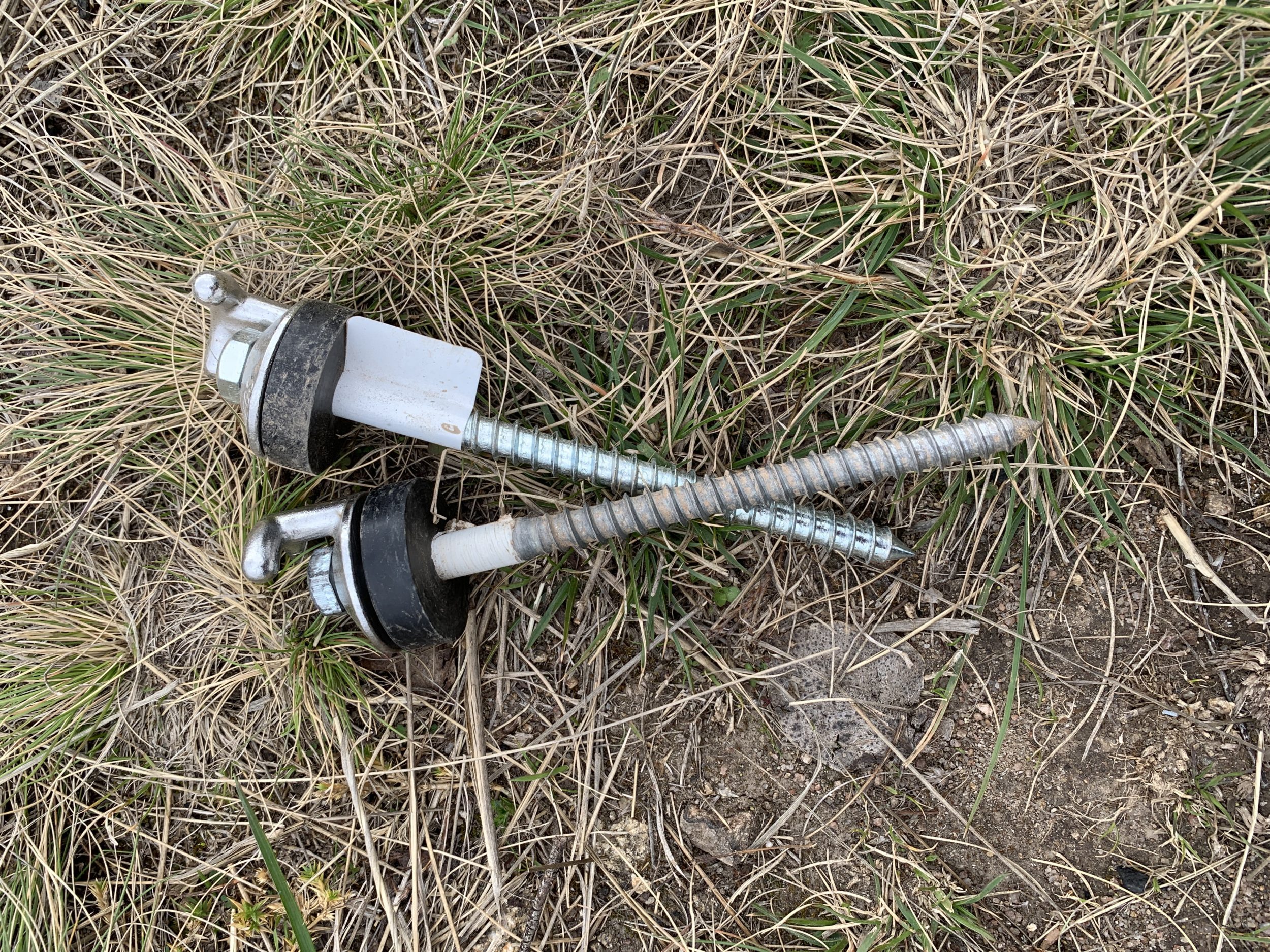
The tent is hardcore, so go hardcore on the pegs. The pegs that come with the tent are really solid, but they didn’t cut it for the conditions up here. The winds are often wild and the ground is bloody hard in some places. Getting traditional stakes into the ground is an arduous task and in the end, even my best efforts saw some pegs come loose after 5 weeks of battering weather. My solution to this problem was to step up my peg game.
I cannot recommend enough pegs you can drill into the ground with a power drill, they are absolute game-changers; the perfect hardcore addition to the hardcore Homecamp Bell Tent. Short of overnight hikes, I don’t think I’ll ever use stake-based pegs again, ever, for any camping or tarp-based needs.
Sidebar
Lesson #4 – learn to tie proper knots.
More specifically, a guy line knot or the tautline hitch as it’s technically known. As a ‘bell tent noob’ or perhaps more broadly an ‘all-round knot noob’, I did not know how to tie this most simple of knots. Now I do and I’m all the better for it. The Homecamp bell tent comes with the guy lines pre-tied to the tents fixing points. However, as in my case, as I’m sure would be with others, on occasion some of the knots come loose or undone somewhere along the line from packing and shipping thru to initial set-up.
A quick Google and practice and I was proficient in the tautline hitch, and I’m forever better for it and so is my tent.
Most lessons were learnt from this first collapse. And on the positive side with the tent being soaked on the inside and out for five weeks straight, I was able to skip the recommended ‘how to season your tent’ guidelines that are a must for anything canvas. The tent has been full-blown watertight ever since (ps see Homecamp’s article on seasoning your tent if you don’t plan on leaving it in the elements for stupid periods of time).
Sidebar
Final Review
Since mastering these elementary lessons, the tent has been solid as a rock. Surviving through the craziest of storms. With the on and off lockdowns this year, at one point I left the tent unattended for over eight weeks straight, through the middle of winter, in the same stupidly exposed spot, only to find upon returning that not only was the tent still standing, and not only were all the things I left inside bone dry, but the tent was arguably sturdier and stronger than before. If anything the heavy winds seemed to tighten the guy lines (which are amazing quality btw).
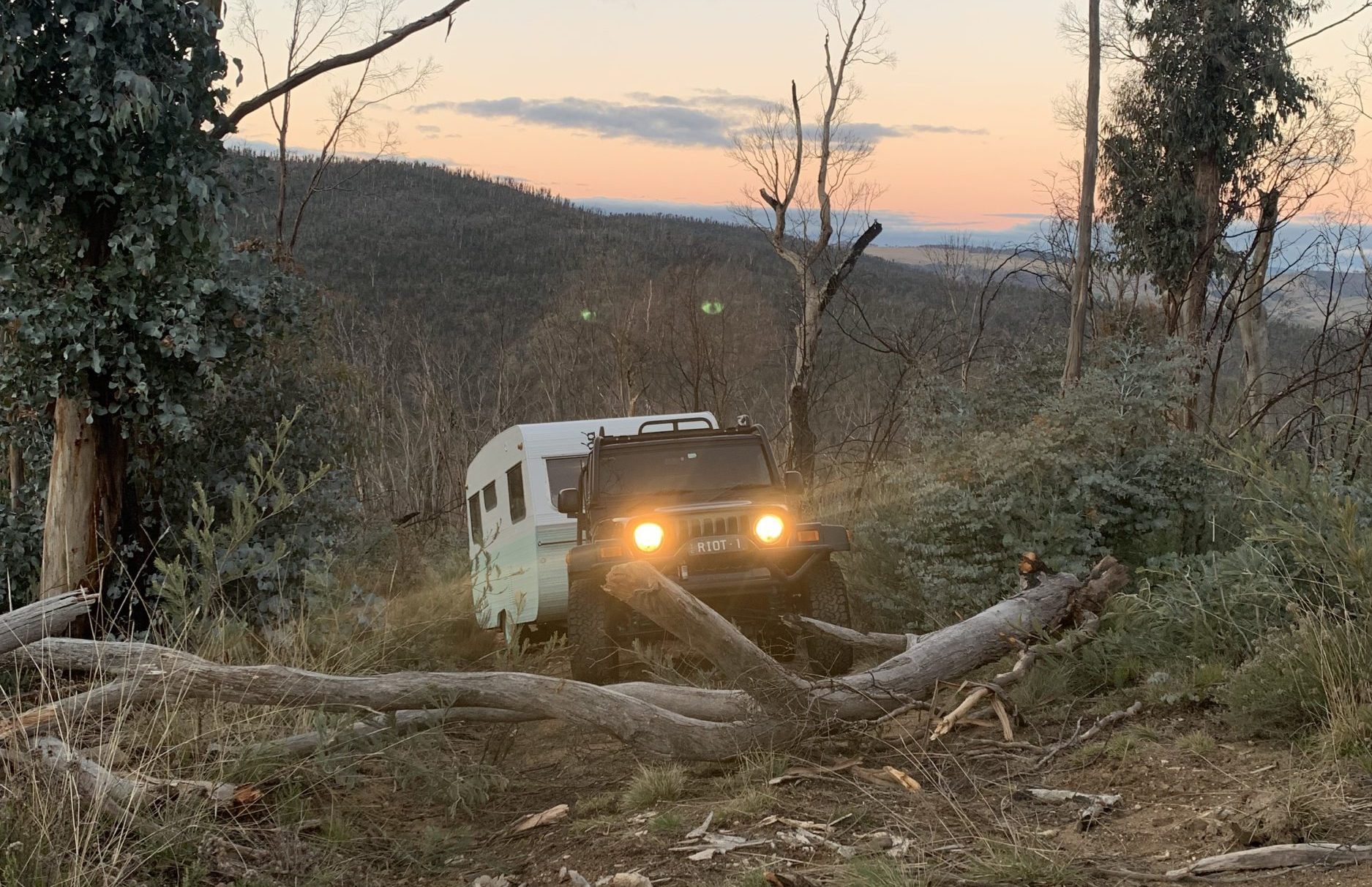
More lessons to come I’m sure, but all in all, I’ve been blown away by how sturdy the bell is. During crazy weather, it’s significantly calmer on the inside than the caravans I have up here. I can’t wait to get it off the ground onto a deck and to expand out with a few more as part of ‘Base Camp Phase 2’.
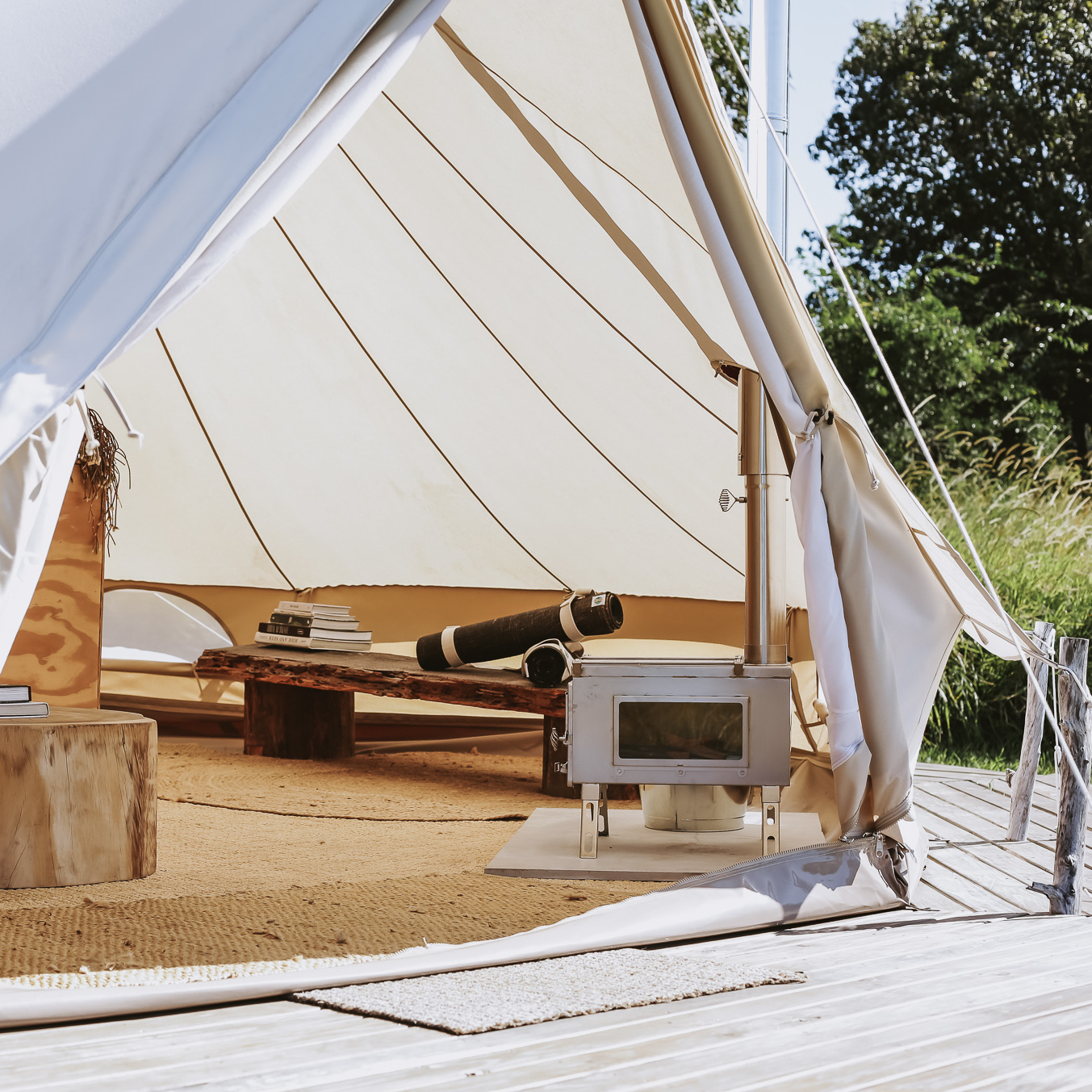
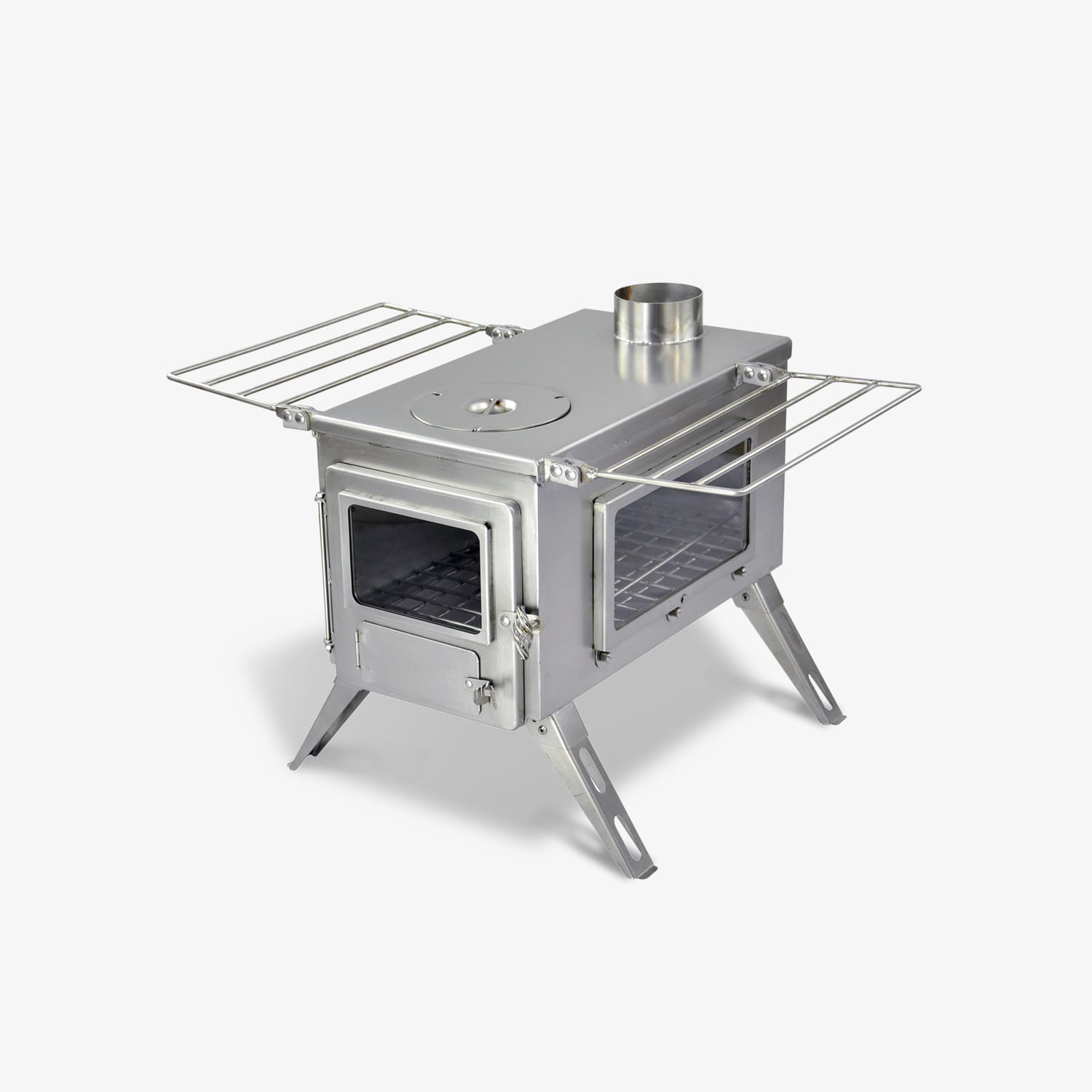
On a side note, I have not installed the stove in the tent yet (that came in the bundle I purchased). I’m holding off until I get it on a deck so I can get the positioning right. That said, I’ve been using the stove (a Winnerwell Nomad – Large) in one of the caravans and it’s bloody amazing. I’m looking forward to getting it set up in the bell tent as well.
Over and out, I’m off to make some more mistakes. A post by Dave Christison – a man of oh so many.
Instagram @dude.dog.mountain
Sidebar