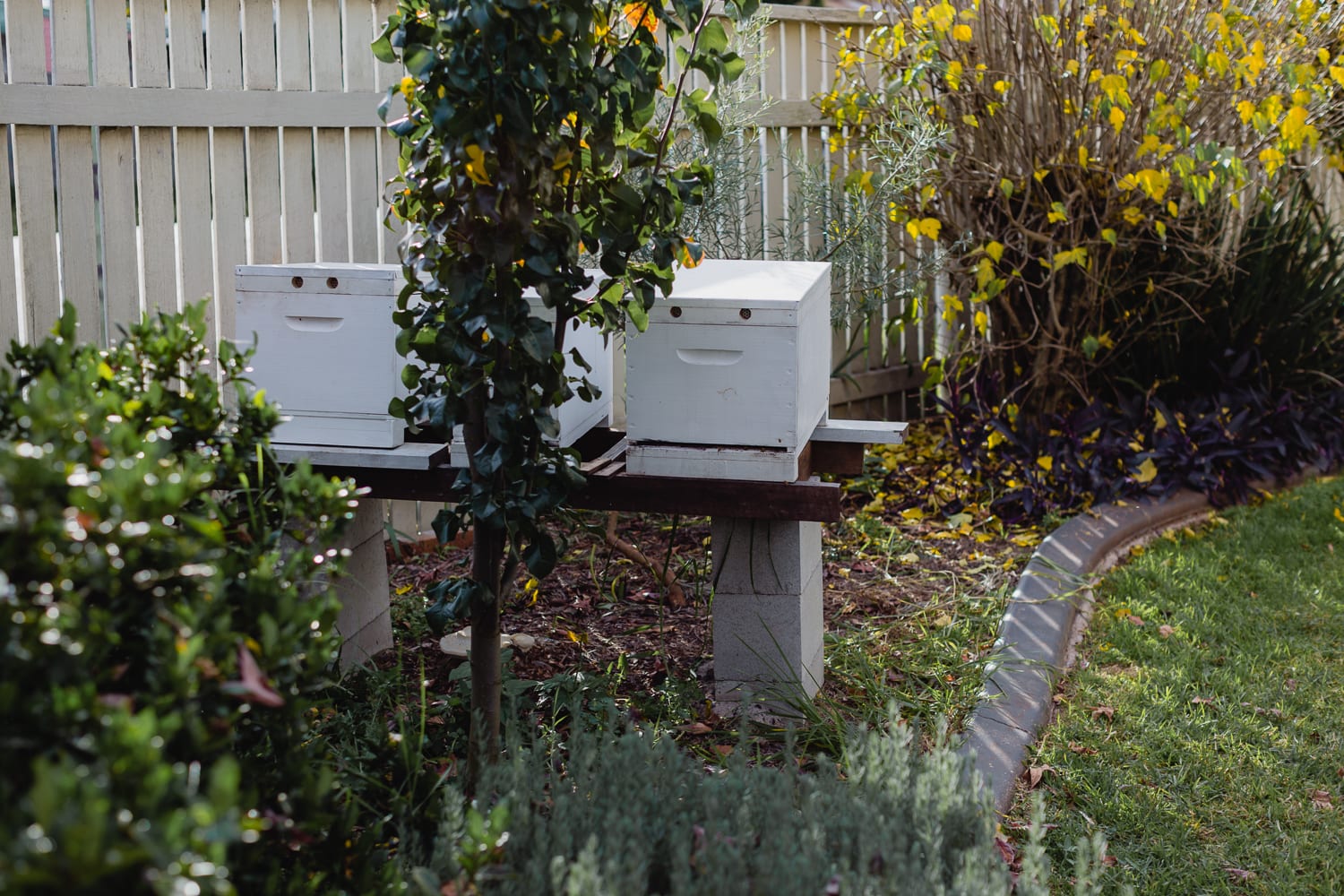
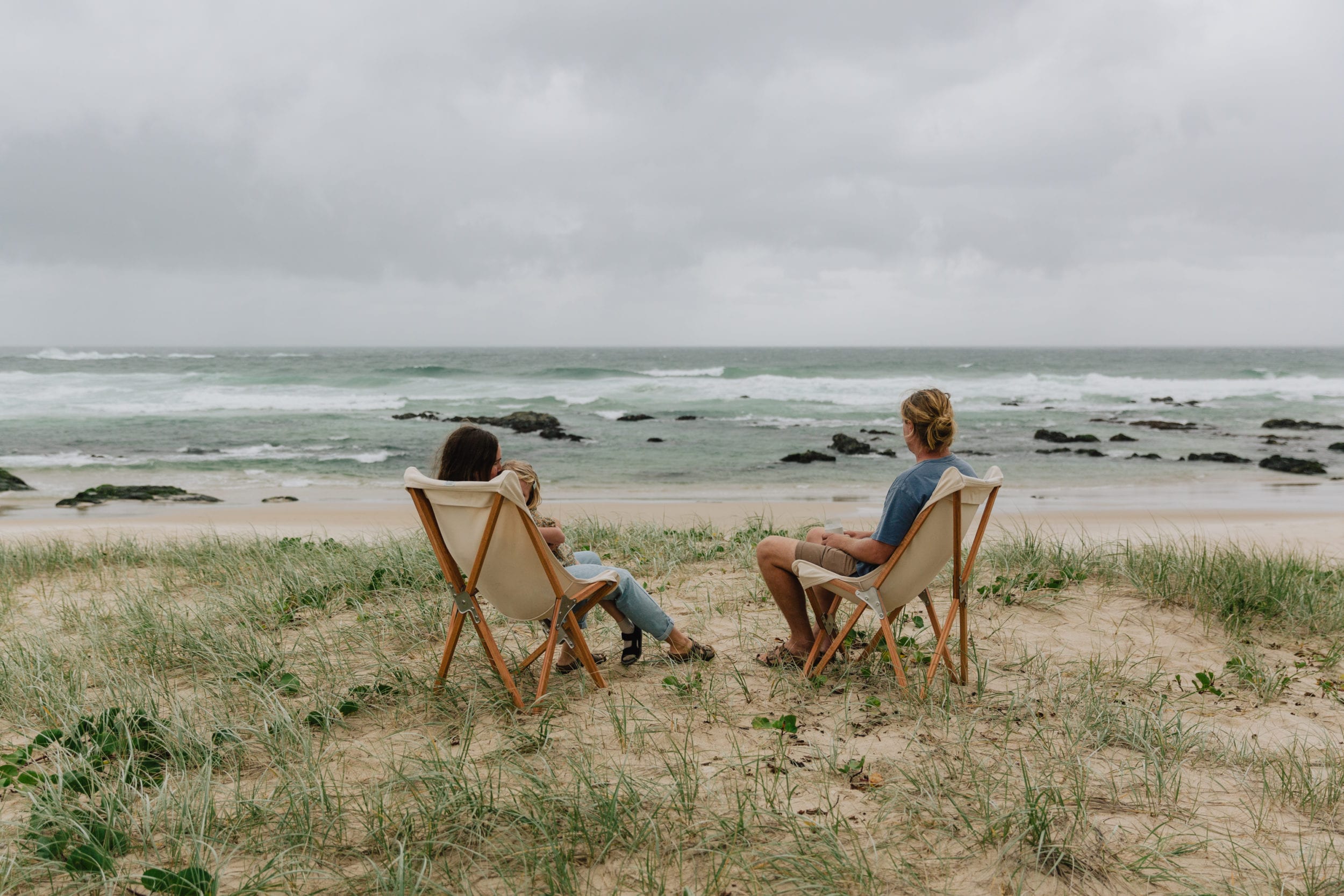
For couple Hayley and Roger from Settler Hives, it started with two beehives in their backyard. Originally in a blueberry field at their farmstay in Canada, and eventually in their residential backyard in Toowoomba, Queensland.
Over time, their love of beekeeping led them to learn more about how important bees are to our ecosystem and they developed a desire to help create a healthy environment for their stripey friends. Not wanting to be commercial beekeepers (which needs a whole lot of kilometres, time and a tolerance for high losses), an idea eventually grew roots. To not just keep bees, but to feed them as well! And so Settler Hives was born.
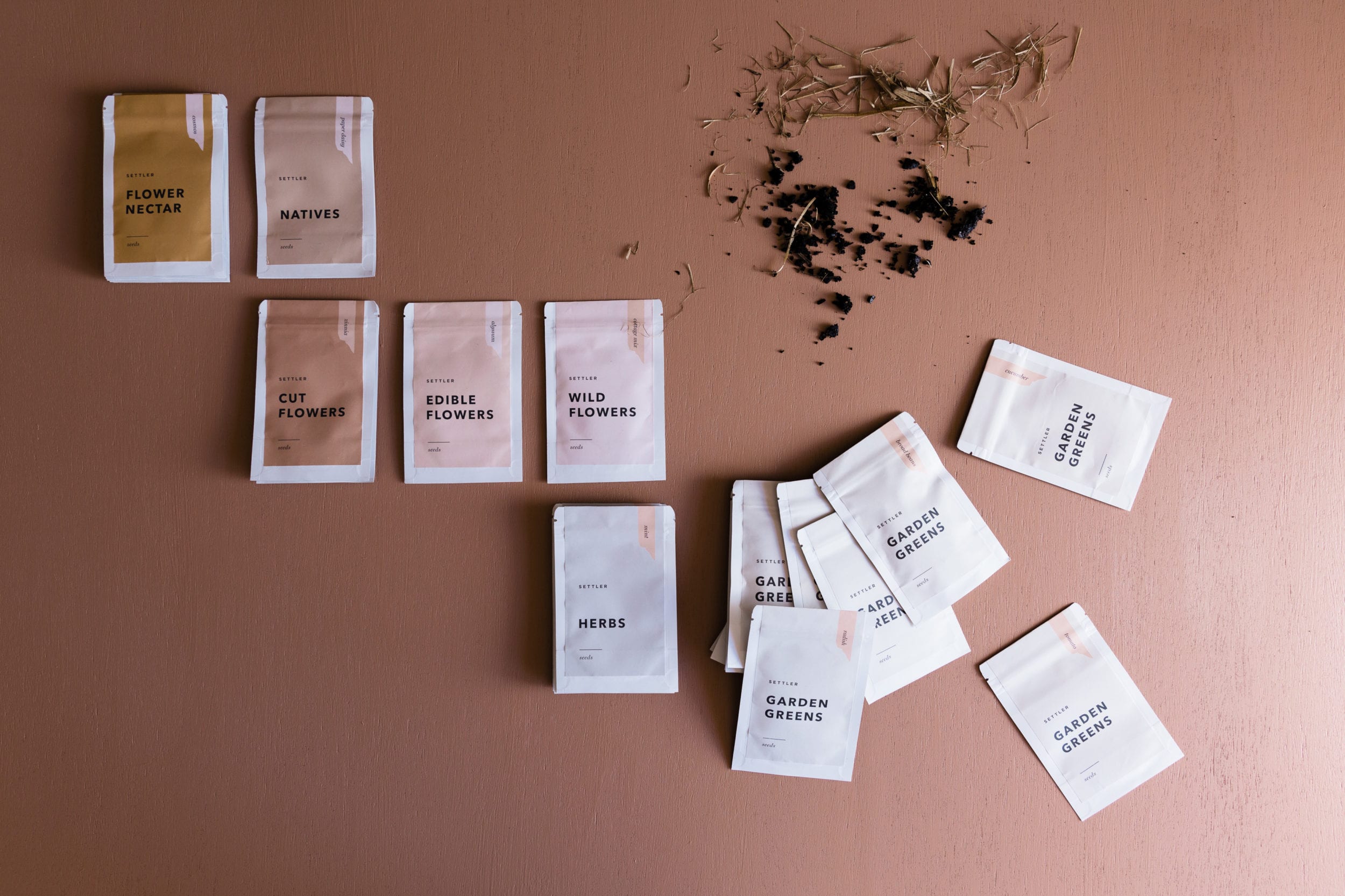
Settler Hives create feel-good products that benefit their surroundings and help shape a positive culture of getting outside – all with flowers, herbs and garden greens sourced from the best seed houses in the world. ‘Ultimately by feeding the bees, we are feeding ourselves.’ We sat down with Hayley and Roger to find out more about beekeeping, seeds, and living the simple life.
Sidebar
Tell us about your beekeeping journey. What would you tell someone looking to give it a go themselves?
The best thing you can do is head to your local beekeeper association. The groups usually meet monthly and are a wealth of knowledge for anyone wanting to get started. The beekeepers in our club are 60+, hilarious and super nice.
Other than that, we’d say to hold off on buying your honey bees until you’ve spent some time learning about them. There are so many diseases in Australia that can quickly move from one hive to the next, devastating colonies along the way. It’s a responsibility to make sure you know what you’re looking at and manage them to thrive – it’s not just about collecting the liquid gold.
Winter is a great time to read up (or watch videos like we did!) before you get into it. Plus it would be devastating to purchase a colony of bees in early spring and then they fly away in a swarm! It happens all the time; it’s their natural cycle of procreation.
Oh, and don’t forget to register your beehive with the Department of Agriculture and Fisheries so they can keep you informed and keep track of your new clever stripey friends.
Sidebar
How much honey do you harvest?
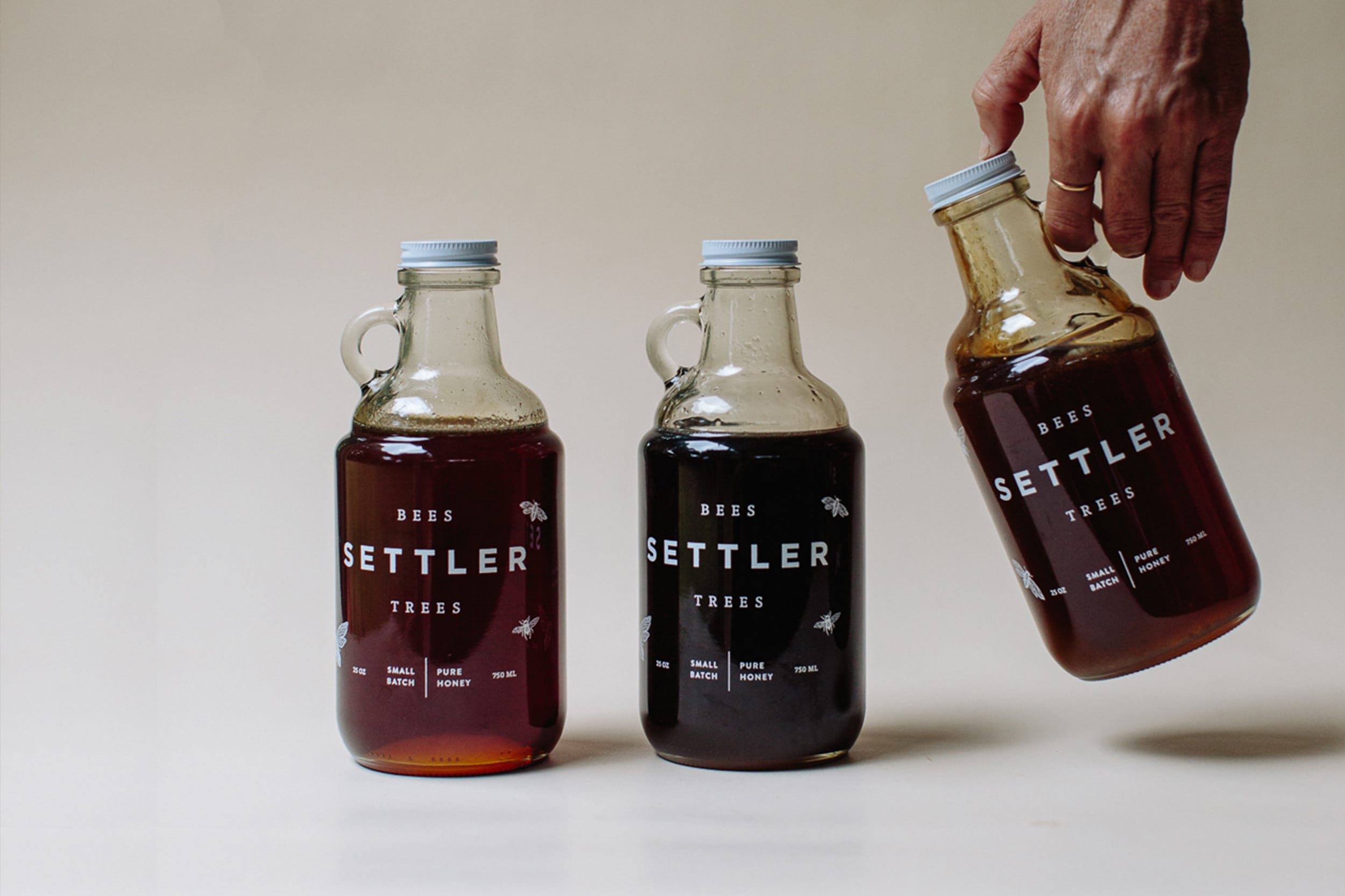
50-70kgs per hive a year. It totally depends on rainfall and blooms.
What equipment do you need for beekeeping?
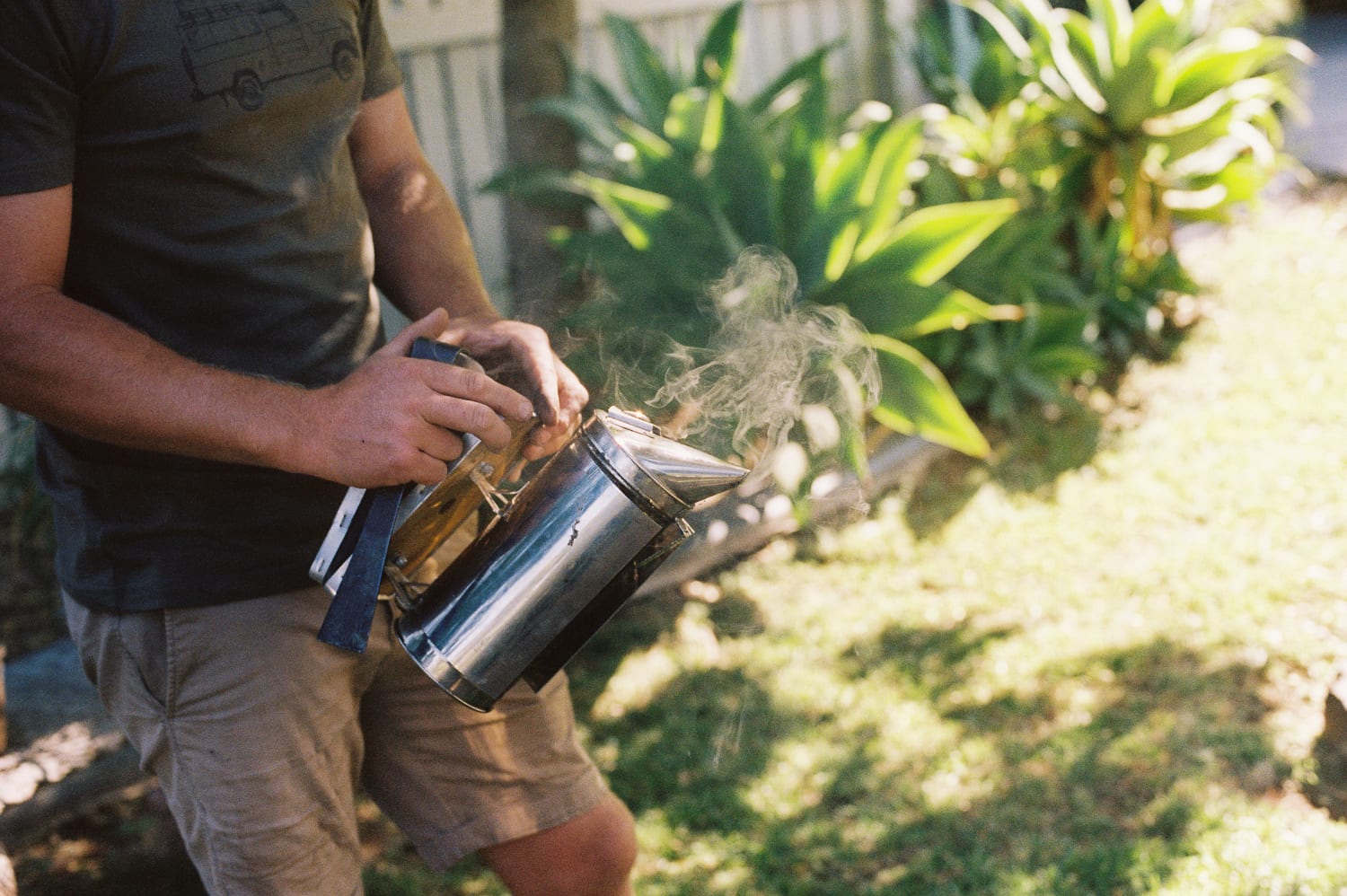
A Smoker, Hive Tool, Beekeeping Jacket/Veil, European Honey Beehive (we like to work with a 8 frame Langstroth), Honey frame extractor, Uncapping Knife or Fork, Strainer, Honey Pails and lots of storage – as your beehive grows so will your Langstroth components but they need to shrink back in the cooler months.
Sidebar
Back to the bees, why are they so important? And do you get stung?
Globally there are more honey bees than other types of bees and pollinating insects, so essentially it is the world’s most important pollinator of food crops. It is estimated that one third of the food that we consume each day relies on pollination. It’s pretty simple: if we don’t have pollinators, we don’t have food!
Regarding getting stung, I love when people ask this question! We totally get it. Roger and I still get stung from time to time. Roger says he aims for 15 in a season, he read somewhere that you can build up a tolerance with that amount!
The thing is, when you do get stung it’s usually something you’ve done. Bees aren’t naturally aggressive. Roger and I usually get stung when we accidentally squash a bee when checking the hive, or Roger is pretty much peering in the entrance. They are reactive, so the bees have taught us to be calm and slower. We nearly always get stung when we are rushing through the hive. Some days we open the hive after smoking them, notice they’re moving around a lot quicker and bomb us in the face a few times. Time to shut up shop and come back another day!
Sidebar
How have your lives changed since starting Settler Hives?
Starting Settler, we feel we had an opportunity to create a brand that can satisfyingly offer others a solution and complement the lifestyle we want. Consumerism feels like it sucked the souls out of us for the longest time. The pursuit of happiness has led us to try and live a life slowly, being present in what we do, how we feel and how we connect with others. It feels like our current culture isn’t thriving in a healthy way. There is not enough time left in the day/the week to enjoy what you’ve worked so hard for. Surely we’re not alone with this feeling and frustration …
Growing something from seed is so satisfying, because you do have to give it your attention (watering, protecting it from pests) and it takes time and a fair bit of patience. Forcing us to not demand the instant, not be in a rush.
Beekeeping also helped us notice what trees and plants are doing and how that affects the beehives. We feel like when we’re not in a rush or trying to cram every (good) thing in, our happiness actually increases.
Tell us more about your seeds, what should we be planting in winter and coming into spring?
We were so excited to release our seasonal seed sets for this very reason! They are hands down the number one favourite seller. We knew it would make it easier for new gardeners to just get in and get started. We are always trying to remove roadblocks for people so they will give gardening a go.
In winter, it’s not true that nothing grows substantially. We pop some snow peas and radishes in the ground, and they come up reliably. We also keep the micro kale going for a boost in nutrients to any meal. Winter is perfect for planting paper daisies, forget-me-nots and sweet peas too.
In spring, plant all your nectar flowers, like lavender. And you’ll want to get your cut flowers like dahlias, zinnias and stocks in the ground, ready for summer. We also love chamomile and cosmos to add some texture and height to the garden beds.
Sidebar
Favourite way to enjoy the outdoors?
Be in it. In the daily form of it, just to feel the fresh air and potter around the house in the yard.
We don’t have a huge space; a 510sqm suburban block is our home base and the cottage takes up most of it. We love the trial and error of planting seeds and working out pretty annual blooms like growing here (it’s amazing what difference the soil makes from this yard to our cousins just 2kms away!). We even dug up our front weedy lawn to make room for more flowers.
Most recent adventure
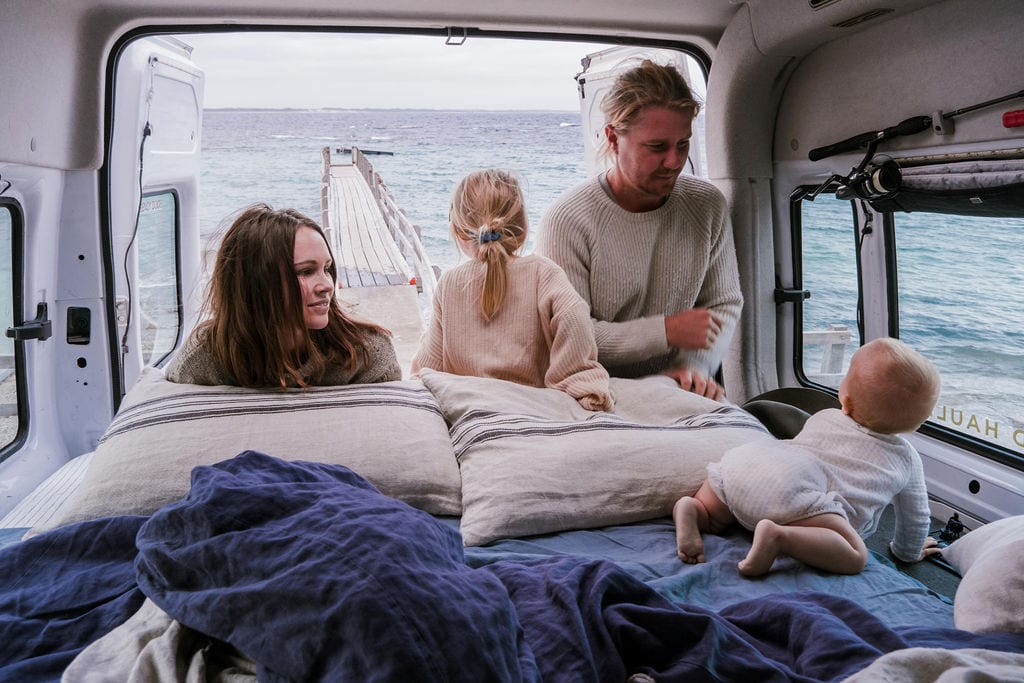
We just returned from driving to Perth with our girls (4 and 1 year old). We had three months to cross the Nullarbor and explore the Great Southern and South West corner of WA where we have about twenty beautiful stockists we were so happy to visit in person. We lived in a converted Ford Transit which is now our daily run around!
Coffee, how do you take it?
Our favourite way is picking up two flat whites (one large and a medium) and a baby chino with the marshmallow on the side.
Sidebar
Follow Settler Hives on instagram
www.settlerhives.com
Sidebar