What to take – The Ten Essentials
Well known amongst the outdoors community, The Ten Essentials is a now-iconic list that was first published in the 1930s by The Mountaineers Club, the original list was proposed as a response to two fundamental questions a mountaineer should ask before embarking on an expedition:
- Can you respond positively to an accident or emergency?
- Can you safely spend a night or more outside in an emergency?
The Classic Ten Essentials were the items recommended:
- Map
- Compass
- Sunglasses and sunscreen
- Extra clothing
- Headlamp or flashlight
- First-aid supplies
- Firestarter
- Matches
- Knife
- Extra food
The list has since been revised several times and is now known as the ‘10 Essential Systems’, giving the list more flexible and a functional approach. To this day, it is still the go-to list that should form the basis of any kit you bring when heading out into the wilderness, either by foot or in a vehicle. This kit makes an ideal emergency kit to have in your car at all times.
Even on a day hike, it’s good practice to take at least a partial kit, as it trains you for preparedness.
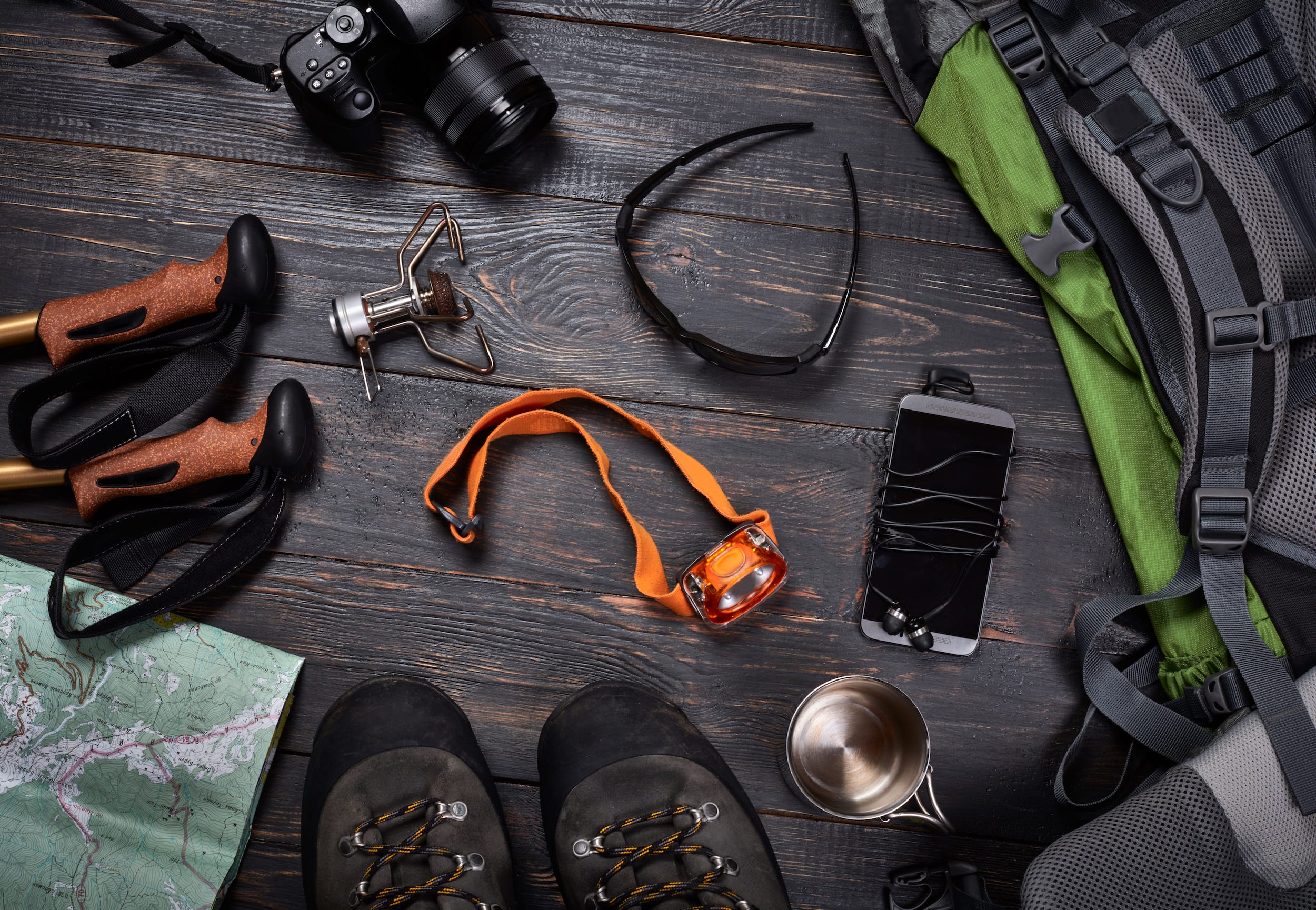
Here is how the ‘The Ten Essential Systems’ breaks down along with some extra ideas we have added:
- Navigation
We should all agree that knowing where you are, where you intend to go and what is the best route to take, is not only sensible but essential (especially in remote areas).
Whilst GPS is now ubiquitous in smartphones there is nothing like the (almost) failsafe combination of a topological map and compass. They are fun to use and keep your senses attuned to the landscape and its features. Look for a baseplate compass with a mirror as it doubles as a signalling device and potentially a solar ignition if you find yourself without a lighter.
There are a variety of handheld satellite navigation devices available which are more robust than your phone and have extra battery life and better coverage in the backcountry – this is a good addition to a map and compass, not a replacement.
- Sun Protection
It’s drummed into us from an early age here in Australia and as a result, almost everyone is sun aware. A proper wide brim hat, sunglasses and sunscreen are almost essential in our climate as severe dehydration is extremely dangerous.
- Headlamp and high-powered torch
If you do much overnight hiking you will know that often there are very early starts and potentially late arrivals due to unforeseen circumstances. Key to finding your way and each other in the dark, illumination is a must-have item for any emergency kit. A high lumen torch can double as a signalling device. Bring extra batteries.
Sidebar
- First aid kit, plus insect repellent
A comprehensive first aid kit should be in every vehicle when heading out to the bush. If you are hiking then you should take an extra basic first aid kit including basics such as painkillers, bandaids, stretch tape, antibiotic cream. Keep your kit in a ziplock bag or dry pouch. Here in Australia, you might want to consider taking extra precaution with a snake bite kit.
- Knife and tools
A Swiss Army Knife or Leatherman is the perfect multitool to take on any outdoor trip. Combine this with a decent full-tang knife then you have covered a lot of bases – you can repair items, process wood for a fire or even make a shelter.
- Fire
A well-considered fire starting kit that will work in any eventuality is essential. A good kit will include waterproof matches and lighters but add in Ferro rod that can be used to start a fire with a knife and you have a backup device. You should keep some tinder in your kit that is guaranteed to take a spark. Stow your kit in a sealed waterproof container or dry pouch.
Aside from access to water, probably the most essential lifesaver especially in inclement weather. What extra clothes you take will vary depending on the type of terrain and time of year you are travelling. A change of undergarments, beanie, socks and gloves are recommended. Synthetic base layers made from polypropylene and a fleece rather than cotton. A lightweight waterproof jacket made from a synthetic such as Gortex to keep you dry.
Sidebar
- Shelter:
An emergency kit should have some sort of shelter – either an emergency bivvy (basically a thermal bag made of heat reflective polythene) or a lightweight plastic poncho/tarp.
- Nutrition (extra food)
Trail mix (dehydrated fruit and nuts), breakfast or protein bars, chocolate. Food that doesn’t require refrigeration or preparation that is rich in protein, carbohydrates and glucose.
- Hydration (extra water)
A minimum of 2 litres in either a couple of bottles or a bladder, and a backup method of treating water, either a water filter/purifier or chemical treatment.
Baring a life-threatening injury, staying warm and hydrated is the most important items on this list and without, the most life-threatening. Aside from this then you should always aim to have a communications device with you. Either a phone with an extra battery or charging device or satellite phone if you are going remote. We also take a set of walkie talkies that the kids love and are handy if you are in a group walking at different speeds.
The ten essentials are a good guide to packing for adventures big and small!
Sidebar