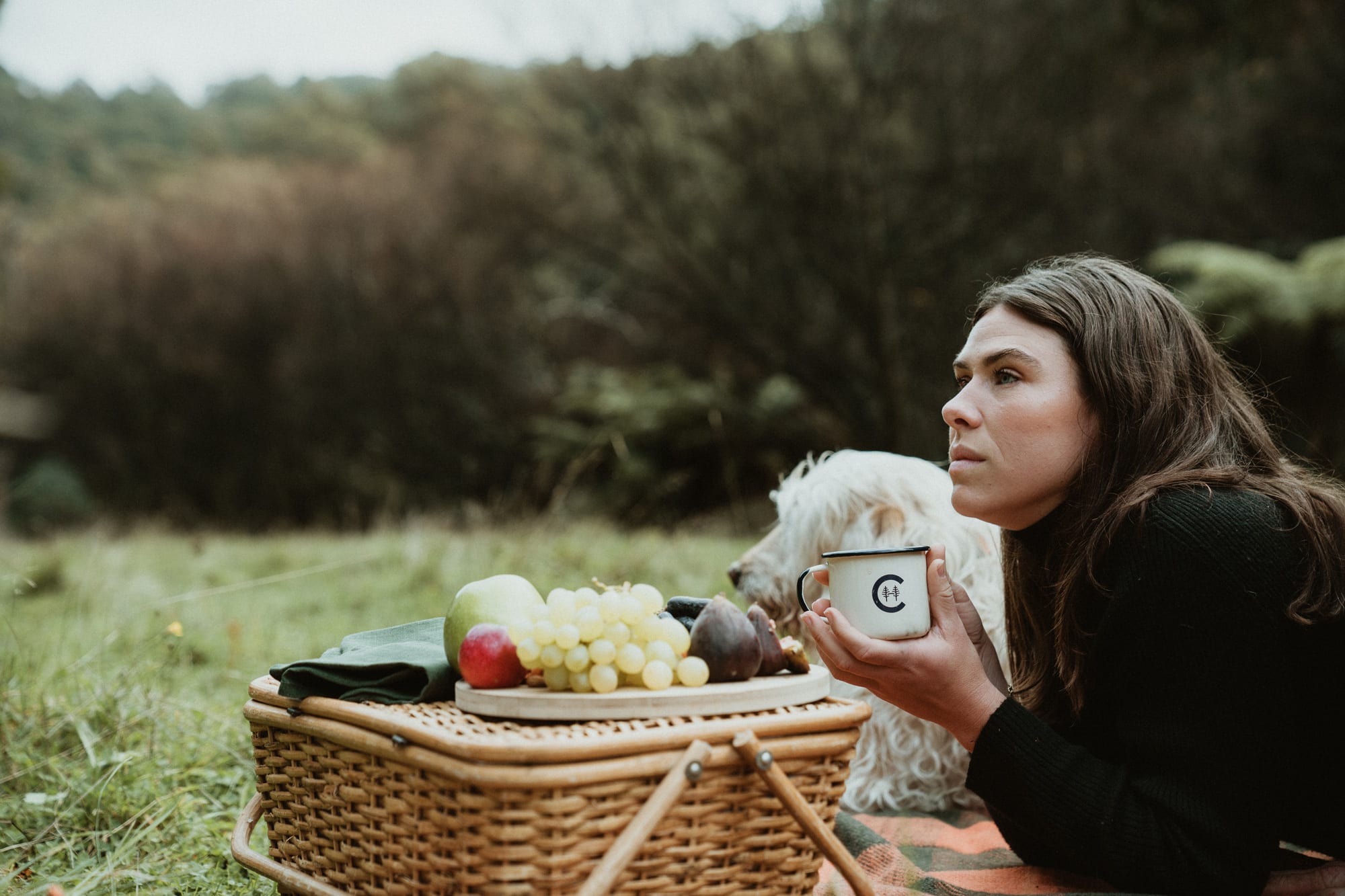
Camping offers opportunities to see and experience a new landscape, to forage from new fields and connect with local growers. It’s possible to be even more sustainable on the road than it is at home, if you know how to pack and what to search for while you’re out on adventures.
The experience of camping can change so much depending on how you do it. For us, the best camping experience comes when you totally immerse yourself in your environment, in the culture and nature around you – it makes for a much more sustainable experience.
It’s about collecting food from where you are, both wild and locally produced, and choosing camp spots that are abundant with resources, like wood for your fire and water for your pot. It’s about bringing the essential items with you so that you have everything you need to be comfortable, but leaving everything else behind so that you have to forage from the local landscape as you adventure through it.
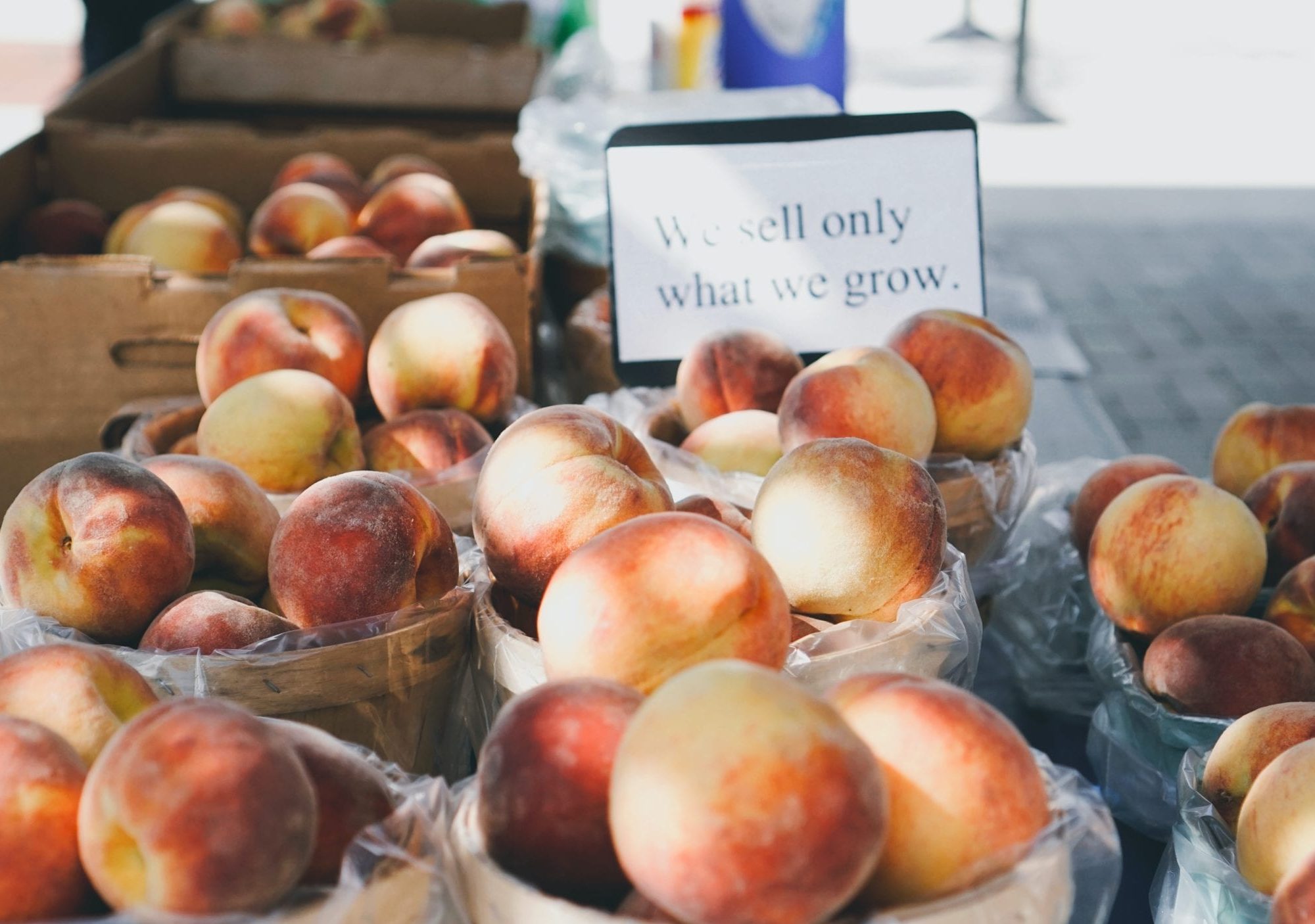
Of course, sustainability isn’t just about nature. It’s about respecting the place you are visiting as a whole, which includes the people who live in it. The best way we’ve found to do this is to support local producers and buy fresh, local food from them. This food is always the best and it has no carbon miles attached to it. Plus you get to interact with local people who can help you identify good spots to fish, or to forage wild fruits or mushrooms. Support local communities and they’ll support you.
Sidebar
When driving around, observe what is abundant around you, like crops, roadside stalls or local sourdough bakeries. There’s almost always a local farmers market, usually on the weekend. And if you talk to locals, you’ll often find someone with a verdant garden who will sell or trade you something! Keep your eyes peeled as you drive along too – food is all around us.
Camping sustainably is really that simple. If we don’t respect the natural environment and the local people, enjoyable camping experiences will soon be a thing of the past. But respect both of these and we guarantee you and future campers will continue to wish you never had to go home.
Packing smart
Camping is a simple time, one made for getting back to basics. The only two essential tasks you need to worry about are gathering food … and then eating it! How we perform these two simple tasks makes all the difference between camping sustainably and just camping.
Sidebar
Food essentials
We bring just the basics and source the vast majority of our food locally. We always set out with:
- Some homemade passata.
- A jam or marmalade.
- Some pickled mixed vegetables and some fermented vegetables like dill pickles or kimchi (to keep our bellies healthy while we travel).
- Nuts and seeds.
- Pumpkin, potatoes, sweet potatoes, ginger, turmeric, garlic. These are versatile fresh foods that store super well for a long time without refrigeration and easily add flavour to so many different meals!
- Unrefined salt and pepper.
- Good olive oil for cooking.
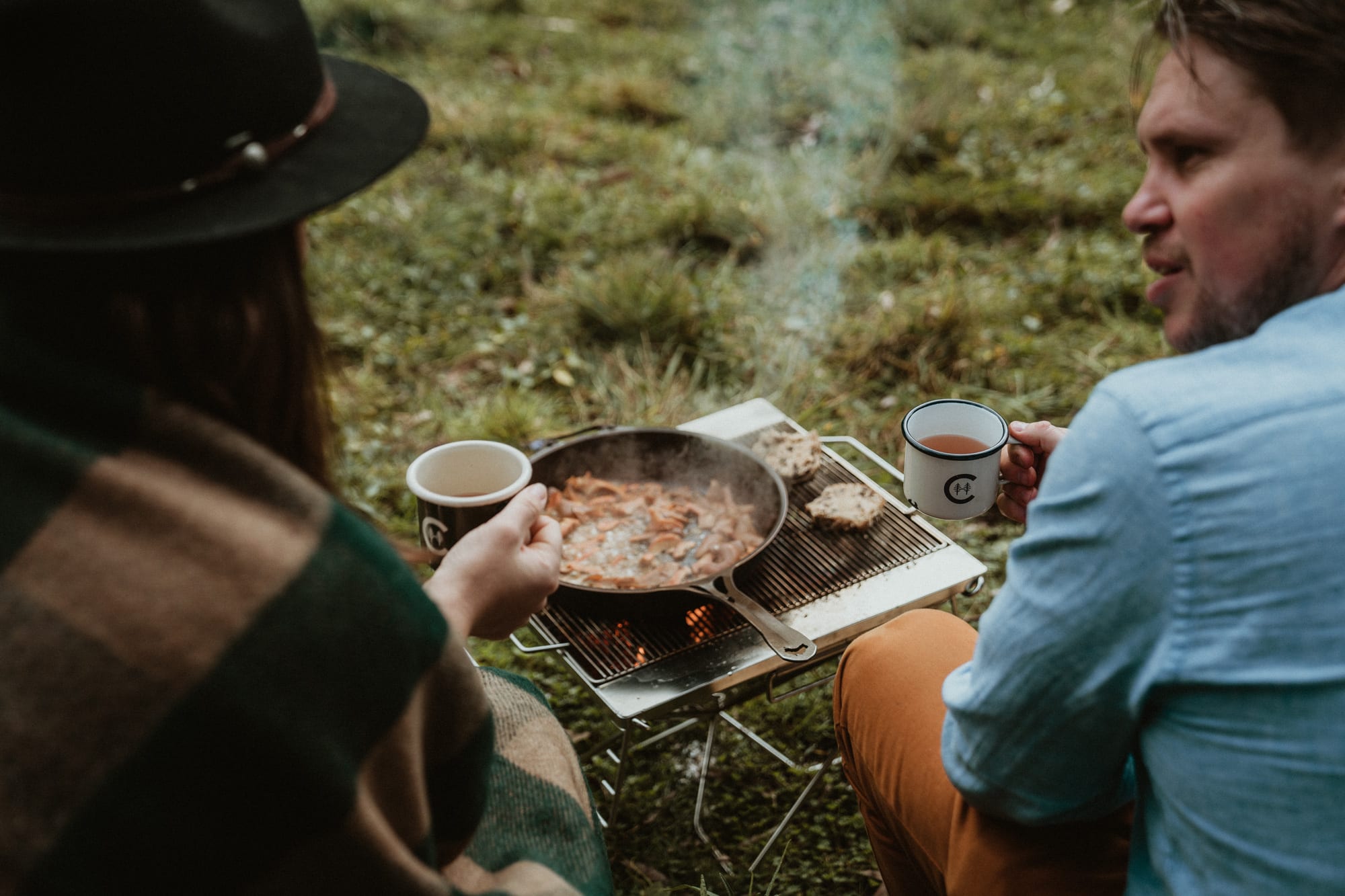
We generally cook on the fire and it’s super important to bring the right equipment for this; otherwise camp cooking can be a major time – and energy-sucker. It only takes a small fire to stay warm and if you have the right equipment, a small fire is all you’ll need for cooking as well.
Sidebar
Equipment
There’s no need to get too carried away and bring everything, including the kitchen sink, on the road. Again, camping should be a simple time. Here are a few essentials we always pack:
- Two stainless steel billies. As steel heats up fast, it is the most efficient vessel in which to boil water.
- A cast-iron frying pan and Dutch (camp) oven. Cast-iron stores heat; this is the most efficient way to capture your fire’s peak energy when cooking more intensive meals.
- A thermos. This means you can make the day’s tea/coffee and hot food on just one fire, whenever it suits you best – and keep it hot all day! We even have two small 330 ml (11 fl oz) thermoses for takeaway coffees on the go because they last a lifetime compared to regular reusable coffee cups.
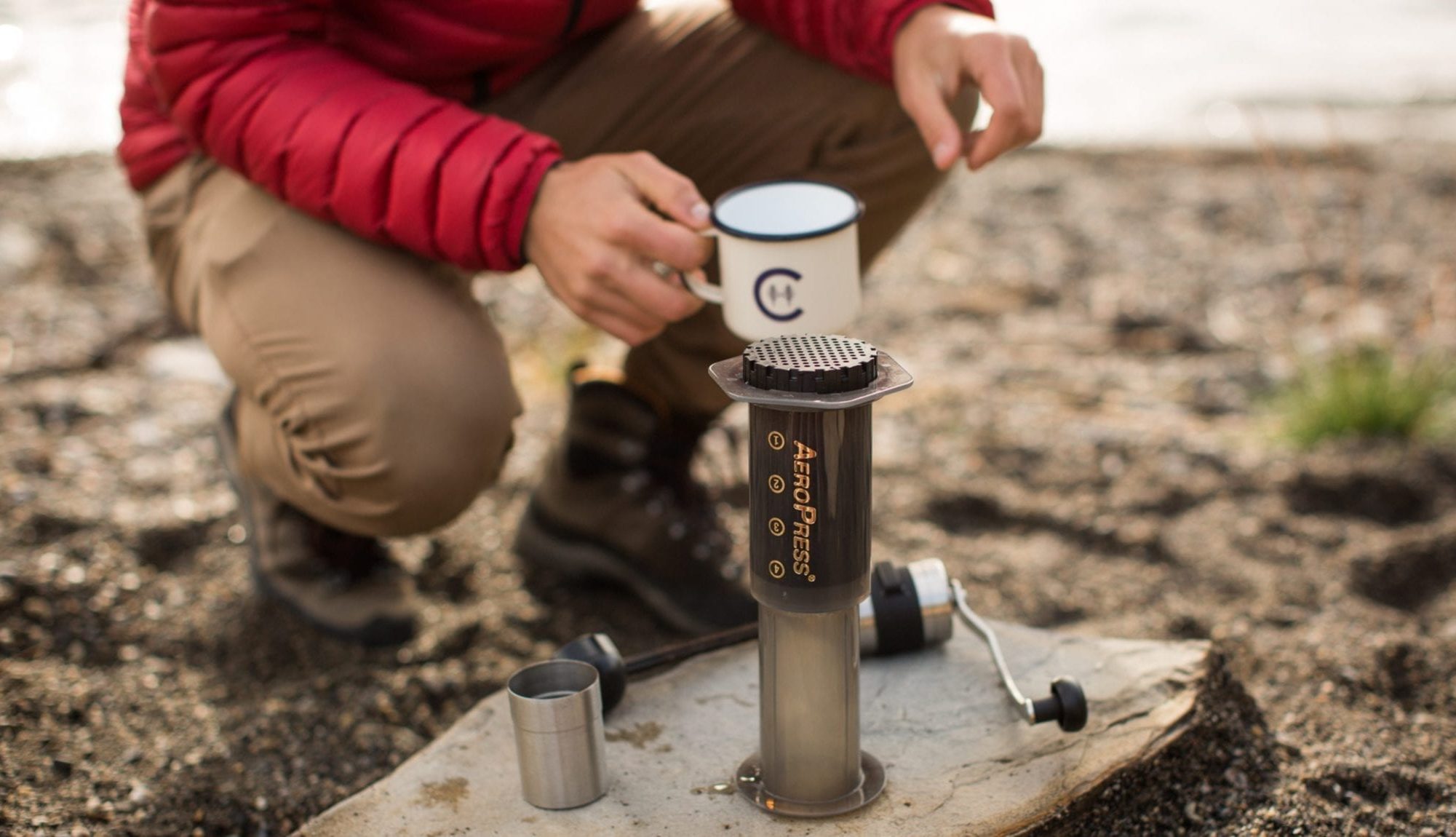
- Coffee grinder and maker (plunger, Aeropress, stovetop – whatever you’re into!).
- A good shovel. Your all-purpose camp tool for moving coals, digging toilet holes and a million other little tasks, but, most importantly, for burying all your compostable scraps to keep them out of landfill. Always bury toilet and food waste at least 20 centimetres (8 in) deep and away from water sources.
- A quality esky (cool box). Spend on this. A good esky will stay cold with just one bag of ice for up to a week!
Here’s a tip: forget the soap. When you’re done cooking, if you have a greasy pot, throw in some wood ash and water and leave it overnight. The combination of fat and ash will make soap overnight, which you can heat to do your dishes with in the morning.
Sidebar
Gathering the local abundance
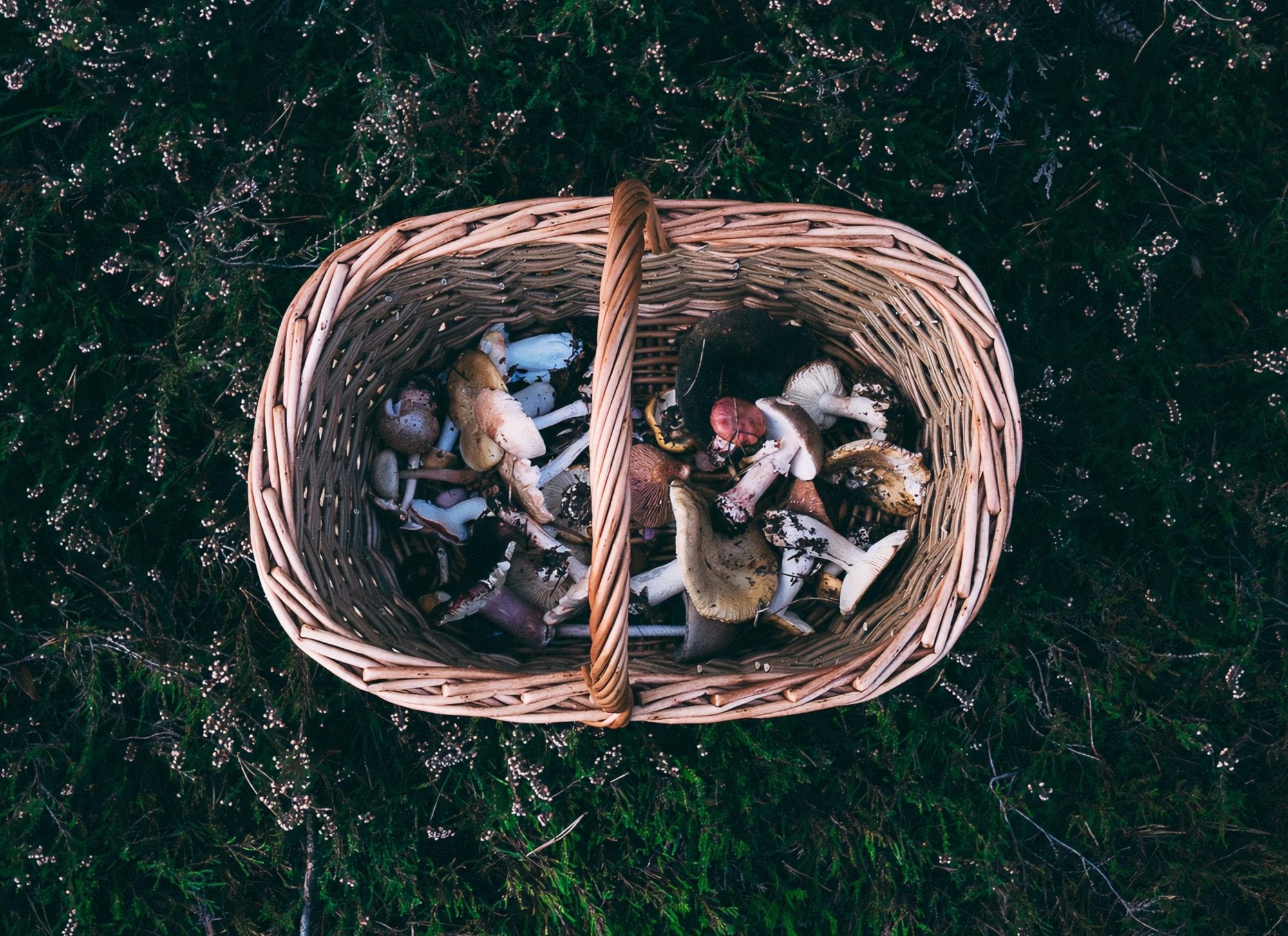
Wild foods can vary greatly from place to place,* but some super-common things to look out for on the road are:
- Wild fennel. An awesome flavouring for soups, stews, etc.
- Wild apples, plums and figs.These look exactly the same as the regular ones, but are just growing wild!
- Blackberries and other wild berries. Make sure they haven’t been sprayed. Roadsides invariably are, but deep bush is generally safe – just make sure there is no yellowing of the leaves, which is a sure sign you need to move on.
- Fish (and other game too, though fishing is by far the simplest way to gather wild meat).**
* Don’t gather from the wild without the supervision of an experienced mentor.
** Make sure you get a fishing/game licence for the state you are in.
Sidebar